Take seven men, five women and five dogs, put them together on a Thursday night, show them a rocky trail on a gnarly mountain on the north end of town, and what do you think will happen?
In the "World According to Nick," of course, they will probably run to the top.
Nick Nichols has been organizing weekly group trail runs for four years.
"I want to emphasize that these runs are for everybody," Nichols explained. "Doesn't matter if you are a walker or runner, fast or slow."
The time is always 6 p.m. but the trail location changes every week. Animas City Mountain was last week's flavor but other runs have included Haflin Creek, Telegraph, Chapman Hill, Colorado Trail, Dry Fork and Smelter Mountain.
Animas, however, remains a favorite for many.
"It's the most bang for your buck in Durango," Nichols said. "It's close to town and it's real simple (to find your way). Just run up and run down."
Animas City Mountain trailhead is located two blocks north of 32nd Street and West Fourth Avenue. A round-trip will take most runners about one hour. There is no water along the trail and you might consider bringing along a hand-held bottle.
Irene Rooney, 48, enjoyed her first trail run last week. She's only been in town for three months but after visiting a local running store, she saw information about the Durango Motorless Transit running club.
"I picked up an application and I figured running a trail with the group would be a good way to check it out," Rooney said. "I have never run trails before."
Gordon Rhodes, a remodeling contractor, runs twice a week.
"I usually go once on my own and once with the group on Thursdays," Rhodes said. "It's different running with a group because I tend to push myself harder."
Besides the camaraderie of running with a group, there still remain competitive types.
Hawaii Ironman veteran Brett Sublett is preparing for the Hard Rock 100, July 8-10, in Silverton. Last week, Sublett was the first runner to reach the spectacular northwest Animas overlook.
"I threw down the gauntlet while running uphill," Sublett explained. "The runner just behind me was suffering."
While all of the runners regrouped on top, took in the views and paused for some conversation, it wasn't long before they all zipped downhill.
Be careful. Don't trip over that rock. Stay light on your feet. This trail is steep.
Animas City Mountain is also the site of the annual Mug Run near the end of October. Rick Callies, who works for Durango Parks and Recreation, has been the race director for three years.
Mike Sulkosky had a big smile on his face during last week's run.
"Animas is kind of tough, but it's a good place to work on downhill running," Sulkowsky said. "It's always fun and it's a great way to enjoy friends."
A group trail run would not be complete without good food and drink. Most runners only punish themselves so they can enjoy unlimited caloric options.
This run ended at the new, nearby Zia Taqueria.
For a complete trail run schedule, see www.go-dmt.org.
See you there.
Wednesday, June 15, 2005
Thursday, June 09, 2005
Going for the gusto
The festive holidays are over and you've long since finished the eggnog and leftover fruitcake. Time to get serious about fitness again, take the leap and complete an Ironman distance race this year. The task of finishing a 2.4-mile swim, 112-mile bicycle ride and 26.2-mile run can be intimidating for the most seasoned athletes. But it doesn't have to be.
There are many considerations while trying to figure out a good strategy of race preparation for an Ironman-distance race. What kind of shape are you in today? I will assume that you’re already riding, running and swimming at least once a week. Do you have a minimum of 12 hours per week during which to work out? Do you have understanding family and friends who won't mind when you spend all of your time training?
Enter a race and give yourself at least three months to prepare. Ironman entries are in high demand, but if you pay attention to the race calendar and figure out when registration opens up for each event, you'll be ready to sign up. Before sending in that registration fee, though, pay attention to the course layout. If you’re not a strong swimmer, don't sign up for a race that has an ocean swim. Some courses are "criterium style" and you might be intimidated by laps on the bicycle and run portions.
Other things to consider before signing on the dotted line are what is the race’s refund policy in case you get injured and aren’t able to make it to the start line. Race fees can run around $450. First-time Ironmen should consider entering a race where they can drive rather than fly. Packing and shipping a bicycle is one pressure that you don't need during your first Ironman.
Gather an equipment list and make sure that your budget will allow for a wetsuit, an upgraded bicycle, if necessary, several swimsuits, running shoes and workout clothing. Flippers, pull buoys and a watch with a lap timer are also helpful for training. Do you have good access to a swimming pool? It might be difficult to train for a spring Ironman in the middle of winter unless you enjoy running endless miles on a treadmill and watching Tour de France videos while logging in miles on your indoor trainer.
Many would-be Ironmen come from a strong background in one sport and only need to polish their skills in the other two disciplines and build some endurance. Cathy Tibbetts, Durango resident and Montrail ultrarunner, has been running and racing for 20 years.
"I already swam and biked a little but when I decided to try my first Ironman in Arizona this spring, I just made a commitment to add in more miles in those areas," Tibbetts says. "I joined a Master's swim program, took my turbo trainer out of the closet and started riding as many centuries as I could fit in on the weekends."
Not all would-be Ironmen have much experience in triathlons or in one area, though. Gabe Wheeler is a manager at a landscape company in Thornton. Wheeler chose Ironman Arizona as his first triathlon.
"To tell the truth, I never really gave much thought to doing a shorter distance race," Wheeler says. "My first exposure to triathlon was the media coverage that Hawaii receives so I have always associated 'triathlon' with Ironman. When I committed to doing a triathlon, I committed to doing an Ironman because that was the obvious thing to do."
Finding the time to train for an Ironman was the most difficult thing for Karen Rudolph, who did her first Ironman in California in 2002.
"It was a lot of time away from my husband," Rudolph recalls. "But if you are committed and dedicated to your training schedule, you can train your body to do anything."
Sander Rigney, product manager for RockShox, from Colorado Springs, is racing his first Ironman in Arizona this spring. Rigney also found it difficult making time for training.
"A large percentage of my travel involves testing bicycle products and while I was in Spain, I did a two-week ride camp, riding each day with various European bicycle manufacturers," Rigney says. "That gets one sport out of the way, so I just have to squeeze in a little running or swimming before or after work."
Spend a little extra time on your weakest event but don't get too bogged down by this. The bicycle is the most important part of the Ironman because you'll be at that the longest. You don't need to set any world records during the swim. It's a warm-up for the rest of the day and you only need to complete the swim without drowning and within the cut-off time. Everybody is tired during the run portion and unless you’re a top competitor, get used to taking frequent walking breaks. Running is important but it’s also the discipline where you’re most likely to get injured while training. Better to get to the start line healthy rather than suffering a running injury.
Treat yourself to occasional races during your training weeks. You may want to complete an international distance (1-mile swim, 25-mile bike and 6.2-mile run) or a road race. Training is the hard part and racing is fun so enjoy these events.
Don’t forget to incorporate brick workouts, one discipline right after the other, especially biking and running. The cement-feeling legs go away after you run for a mile or two.
Find a training partner if you can. This is helpful for the run days when it’s raining outside or mornings when you’re tired and would prefer to sleep in rather than going to a pool for endless laps. You’re more likely to complete a tough workout if you have a friend to share it with. Master's swim programs are available in most cities. Join a running club so that you’ll have some company, especially for the long runs. Club rides are beneficial but can also be intimidating if you’re not used to riding in a tight pack.
Make training fun. Do a two-day self-supported bicycle tour by picking a destination 60 miles from your home. Ride there Saturday, get an inexpensive hotel and ride back Sunday. This only requires half the thought process of two long workouts. Once you've biked the first day, you don't have much choice but to go back on the second day.
Take a break from pounding the pavement on your runs and drive to a scenic destination for a soft, forgiving trail run. Most people don't have access to open water on a regular basis but for a treat, take a vacation to a beach or lake and practice some open-water swimming. It's not difficult but you’ll need to practice lifting your head out of the water so you can sight the course. If you’ll be wearing a wetsuit during the Ironman, get accustomed to wearing it. Many people chafe and it’s important to figure out where you need to put lubricant.
Don't be afraid to schedule a day off. You can take up to one day off per week and still fit in your training. If you’re a compulsive Type A personality and you can't stand the thought of taking a day off, do yourself a favor and mix things up a little. Play pick-up basketball for a workout, hit some tennis balls with your favorite partner or pull a rowing ergometer.
On race-day, have fun, regardless of the outcome.
Katie Baker, National Teams Program Coordinator for Tri-Fed in Colorado Springs, did her first Ironman in Lake Placid in 2001.
"The day before the race my family and I had a nice hike in Adirondacks with a little picnic in the forest to keep my mind off the next day," Baker said. "Race day I had no goals for myself other than to finish and feel good. I had no idea what to expect regarding time."
Baker finished in 12 hours and 3 minutes and, after losing site of her family during the finish, she enjoyed a post-race massage while her family enjoyed pizza. Baker will be racing her fifth Ironman in Arizona.
*****
The cornerstone to any successful Ironman is the necessary training. There are numerous books written on the subject and there are many websites and coaches available to help you devise a program. The following is intended to be a guide.
Many exercise programs are scheduled by time considerations. For example, bike two hours or swim one hour. This may work for some individuals but I prefer to measure my workouts by distance. When I race, I'll need to go a certain "distance" rather than a certain "time" so I think it's better to think in those terms. Get a logbook and make daily entries for all of your workouts. This will hold you accountable.
Gradually build your weekly mileage in all three disciplines so that you’re covering one to one-and-a-half times your race distance over a week's time. Swimming 3.5 miles, cycling 168 miles and running 39.3 miles during your longest training week would be ideal but this may be a difficult goal to reach, especially since biking 168 miles takes most people 8-10 hours to complete.
Practice each discipline two to four times a week. Do a long workout that’s at least half the race distance each week, do an interval session, and do one or two other workouts of middle distance for each discipline. For example, running workouts for the week would include a 13.1-mile run, a track workout consisting of a warm-up, several quarters, halves and three-quarter mile pieces, and one or two runs of between five and eight miles. Complete similar programs for biking and swimming.
If you can, pick three different weeks to do a time trial for each complete race distance. One week, swim 2.4 miles, one-week bike 112 miles and one week run 26.2 miles. These workouts will build significant endurance and confidence.
Resources
For a schedule of races trademarked by Ironman USA, visit www.ironmannorthamerica.com. Currently, there are events in Arizona, Canada, Florida, Coeur d'Alene, Lake Placid and Wisconsin. There are other Ironman-distance races in the U.S. but they’re not put on by the same organization. Check out event sites like www.active.com for listings.
There are hundreds of Ironman training programs available online as well as a myriad of training guides. Here are a few places to start.
www.multisports.com — offering online coaching as well as camps.
www.trifuel.com — resource for everything triathlon, including training and gear reviews. www.markallenonline.com — training and coaching by six-time Ironman winner, Mark Allen.
Going Long: Training for Ironman-Distance Triathlons (The Ultrafit Multisport Training Series). Joe Friel and Gordon Byrn. VeloPress.
Start to Finish Ironman Training 24 Weeks to an Endurance Triathlon. Paul Huddle, et al. Meyer & Meyer.
Triathlete Magazine's Complete Triathlon Book: The Training, Diet, Health, Equipment, and Safety Tips You Need to Do Your Best. Matt Fitzgerald. Warner Books.
Starting Out Triathlon: Training for Your First Competition (Ironman Edition). Paul Huddle, et al. Meyer & Meyer.
Be Iron-Fit: Time-Efficient Training Secrets for Ultimate Fitness. Don Fink. The Lyons Press.
Durango-based writer Marc Witkes completed his first Ironman in 31 hours in 1996. It was a "double" (4.8 mi. swim, 226 mi. bike and 52.4 mi. run) in Huntsville, Ala. Marc missed completing the "triple" in Lake Anna State Park, Va. in 2002 by 10 miles on the run. Ironman Arizona will be his first "single."
There are many considerations while trying to figure out a good strategy of race preparation for an Ironman-distance race. What kind of shape are you in today? I will assume that you’re already riding, running and swimming at least once a week. Do you have a minimum of 12 hours per week during which to work out? Do you have understanding family and friends who won't mind when you spend all of your time training?
Enter a race and give yourself at least three months to prepare. Ironman entries are in high demand, but if you pay attention to the race calendar and figure out when registration opens up for each event, you'll be ready to sign up. Before sending in that registration fee, though, pay attention to the course layout. If you’re not a strong swimmer, don't sign up for a race that has an ocean swim. Some courses are "criterium style" and you might be intimidated by laps on the bicycle and run portions.
Other things to consider before signing on the dotted line are what is the race’s refund policy in case you get injured and aren’t able to make it to the start line. Race fees can run around $450. First-time Ironmen should consider entering a race where they can drive rather than fly. Packing and shipping a bicycle is one pressure that you don't need during your first Ironman.
Gather an equipment list and make sure that your budget will allow for a wetsuit, an upgraded bicycle, if necessary, several swimsuits, running shoes and workout clothing. Flippers, pull buoys and a watch with a lap timer are also helpful for training. Do you have good access to a swimming pool? It might be difficult to train for a spring Ironman in the middle of winter unless you enjoy running endless miles on a treadmill and watching Tour de France videos while logging in miles on your indoor trainer.
Many would-be Ironmen come from a strong background in one sport and only need to polish their skills in the other two disciplines and build some endurance. Cathy Tibbetts, Durango resident and Montrail ultrarunner, has been running and racing for 20 years.
"I already swam and biked a little but when I decided to try my first Ironman in Arizona this spring, I just made a commitment to add in more miles in those areas," Tibbetts says. "I joined a Master's swim program, took my turbo trainer out of the closet and started riding as many centuries as I could fit in on the weekends."
Not all would-be Ironmen have much experience in triathlons or in one area, though. Gabe Wheeler is a manager at a landscape company in Thornton. Wheeler chose Ironman Arizona as his first triathlon.
"To tell the truth, I never really gave much thought to doing a shorter distance race," Wheeler says. "My first exposure to triathlon was the media coverage that Hawaii receives so I have always associated 'triathlon' with Ironman. When I committed to doing a triathlon, I committed to doing an Ironman because that was the obvious thing to do."
Finding the time to train for an Ironman was the most difficult thing for Karen Rudolph, who did her first Ironman in California in 2002.
"It was a lot of time away from my husband," Rudolph recalls. "But if you are committed and dedicated to your training schedule, you can train your body to do anything."
Sander Rigney, product manager for RockShox, from Colorado Springs, is racing his first Ironman in Arizona this spring. Rigney also found it difficult making time for training.
"A large percentage of my travel involves testing bicycle products and while I was in Spain, I did a two-week ride camp, riding each day with various European bicycle manufacturers," Rigney says. "That gets one sport out of the way, so I just have to squeeze in a little running or swimming before or after work."
Spend a little extra time on your weakest event but don't get too bogged down by this. The bicycle is the most important part of the Ironman because you'll be at that the longest. You don't need to set any world records during the swim. It's a warm-up for the rest of the day and you only need to complete the swim without drowning and within the cut-off time. Everybody is tired during the run portion and unless you’re a top competitor, get used to taking frequent walking breaks. Running is important but it’s also the discipline where you’re most likely to get injured while training. Better to get to the start line healthy rather than suffering a running injury.
Treat yourself to occasional races during your training weeks. You may want to complete an international distance (1-mile swim, 25-mile bike and 6.2-mile run) or a road race. Training is the hard part and racing is fun so enjoy these events.
Don’t forget to incorporate brick workouts, one discipline right after the other, especially biking and running. The cement-feeling legs go away after you run for a mile or two.
Find a training partner if you can. This is helpful for the run days when it’s raining outside or mornings when you’re tired and would prefer to sleep in rather than going to a pool for endless laps. You’re more likely to complete a tough workout if you have a friend to share it with. Master's swim programs are available in most cities. Join a running club so that you’ll have some company, especially for the long runs. Club rides are beneficial but can also be intimidating if you’re not used to riding in a tight pack.
Make training fun. Do a two-day self-supported bicycle tour by picking a destination 60 miles from your home. Ride there Saturday, get an inexpensive hotel and ride back Sunday. This only requires half the thought process of two long workouts. Once you've biked the first day, you don't have much choice but to go back on the second day.
Take a break from pounding the pavement on your runs and drive to a scenic destination for a soft, forgiving trail run. Most people don't have access to open water on a regular basis but for a treat, take a vacation to a beach or lake and practice some open-water swimming. It's not difficult but you’ll need to practice lifting your head out of the water so you can sight the course. If you’ll be wearing a wetsuit during the Ironman, get accustomed to wearing it. Many people chafe and it’s important to figure out where you need to put lubricant.
Don't be afraid to schedule a day off. You can take up to one day off per week and still fit in your training. If you’re a compulsive Type A personality and you can't stand the thought of taking a day off, do yourself a favor and mix things up a little. Play pick-up basketball for a workout, hit some tennis balls with your favorite partner or pull a rowing ergometer.
On race-day, have fun, regardless of the outcome.
Katie Baker, National Teams Program Coordinator for Tri-Fed in Colorado Springs, did her first Ironman in Lake Placid in 2001.
"The day before the race my family and I had a nice hike in Adirondacks with a little picnic in the forest to keep my mind off the next day," Baker said. "Race day I had no goals for myself other than to finish and feel good. I had no idea what to expect regarding time."
Baker finished in 12 hours and 3 minutes and, after losing site of her family during the finish, she enjoyed a post-race massage while her family enjoyed pizza. Baker will be racing her fifth Ironman in Arizona.
*****
The cornerstone to any successful Ironman is the necessary training. There are numerous books written on the subject and there are many websites and coaches available to help you devise a program. The following is intended to be a guide.
Many exercise programs are scheduled by time considerations. For example, bike two hours or swim one hour. This may work for some individuals but I prefer to measure my workouts by distance. When I race, I'll need to go a certain "distance" rather than a certain "time" so I think it's better to think in those terms. Get a logbook and make daily entries for all of your workouts. This will hold you accountable.
Gradually build your weekly mileage in all three disciplines so that you’re covering one to one-and-a-half times your race distance over a week's time. Swimming 3.5 miles, cycling 168 miles and running 39.3 miles during your longest training week would be ideal but this may be a difficult goal to reach, especially since biking 168 miles takes most people 8-10 hours to complete.
Practice each discipline two to four times a week. Do a long workout that’s at least half the race distance each week, do an interval session, and do one or two other workouts of middle distance for each discipline. For example, running workouts for the week would include a 13.1-mile run, a track workout consisting of a warm-up, several quarters, halves and three-quarter mile pieces, and one or two runs of between five and eight miles. Complete similar programs for biking and swimming.
If you can, pick three different weeks to do a time trial for each complete race distance. One week, swim 2.4 miles, one-week bike 112 miles and one week run 26.2 miles. These workouts will build significant endurance and confidence.
Resources
For a schedule of races trademarked by Ironman USA, visit www.ironmannorthamerica.com. Currently, there are events in Arizona, Canada, Florida, Coeur d'Alene, Lake Placid and Wisconsin. There are other Ironman-distance races in the U.S. but they’re not put on by the same organization. Check out event sites like www.active.com for listings.
There are hundreds of Ironman training programs available online as well as a myriad of training guides. Here are a few places to start.
www.multisports.com — offering online coaching as well as camps.
www.trifuel.com — resource for everything triathlon, including training and gear reviews. www.markallenonline.com — training and coaching by six-time Ironman winner, Mark Allen.
Going Long: Training for Ironman-Distance Triathlons (The Ultrafit Multisport Training Series). Joe Friel and Gordon Byrn. VeloPress.
Start to Finish Ironman Training 24 Weeks to an Endurance Triathlon. Paul Huddle, et al. Meyer & Meyer.
Triathlete Magazine's Complete Triathlon Book: The Training, Diet, Health, Equipment, and Safety Tips You Need to Do Your Best. Matt Fitzgerald. Warner Books.
Starting Out Triathlon: Training for Your First Competition (Ironman Edition). Paul Huddle, et al. Meyer & Meyer.
Be Iron-Fit: Time-Efficient Training Secrets for Ultimate Fitness. Don Fink. The Lyons Press.
Durango-based writer Marc Witkes completed his first Ironman in 31 hours in 1996. It was a "double" (4.8 mi. swim, 226 mi. bike and 52.4 mi. run) in Huntsville, Ala. Marc missed completing the "triple" in Lake Anna State Park, Va. in 2002 by 10 miles on the run. Ironman Arizona will be his first "single."


Thursday, June 02, 2005
Rakita smashes record in Narrow Horse swim
Going into Monday's Narrow Horse 1,500-meter swim, the final part of the three-day stage triathlon which included the Iron Horse Bicycle Classic race to Silverton and the Narrow Gauge 10-Mile Run, Branden Rakita and Michael Hagen were tied with an accumulated time of 3 hours, 32 minutes and 2 seconds.
Rakita was 13 seconds slower than Hagen on the bike, but was 13 seconds faster on the run.
Chance occurrence? Maybe.
But Rakita and Hagen were familiar with each other after having competed in the same masters swim program in Colorado Springs near where they both live.
Hagen, 42, pretty much knew what the end result of the triathlon would be.
"Branden swims in a faster lane than I do," Hagen said.
Rakita, 24, a Durango High School graduate, not only swam faster than Hagen but he also swam faster than any other person who has ever competed in the Narrow Horse swim.
Rakita's outstanding time of 18 minutes and 13 seconds was a new meet event record and a personal best.
"I was happy with my time," Rakita said. "All of the training I have been doing really paid off."
That's 20,000 to 35,000 yards per week.
Rakita is training full time in his quest to become a professional triathlete. In two weeks, he'll be competing in the gnarly Escape from Alcatraz, a triathlon with a difficult ocean swim.
"The current in the bay might be a little bit sketchy and the field is so stacked but I'll just do the best that I can do," Rakita said.
On the women's side of the swim (there were no female triathletes this year), Erin Brinton, 19, also a Durango High School graduate, won with a time of 19:52.18. Next year Brinton will be a sophomore at Occidental College in Los Angeles where she is on the swim team.
"My swim wasn't bad today but I've really only had two weeks of good training," Brinton said. "I had a concussion at school, and I wasn't allowed to swim for a month."
Brinton's best time for a 1,500-meter swim is 17:54.
This summer, Brinton will be living with her parents, Scott and Marjorie, the Narrow Horse meet director, swimming on her own to keep in shape and working at the city's recreational program, Gametime.
There were 51 participants in this year's 14th annual event. Ages ranged from 10 (Hattie
Dahlberg, 36:20.46) to 63 (Jean Smith, 32:23.58).
According to Bill Palmer, Durango Masters swim coach, swimming would be good for so many people because it's nonimpact and doesn't beat up their bodies.
"You can pretty much do it forever," Palmer said.
Hannah Chapman (36:20.46), also 10, and a member of the Durango Swim Club, was expecting to swim 30 minutes but didn't quite make it.
Christopher Meyer (26:11.15), 53, did better than he anticipated.
"I missed the swim last year for the first year in quite a while," Meyer said. "I've done it about 13 times, and I just try and swim according to my current fitness level."
Cathy Stevenson (26:43.40), 33, is a dental hygienist, and six months pregnant.
"I usually swim twice a week between 2,000 and 2,500 yards with my friends in the morning," Stevenson said. "I'll swim until I deliver because it's a nonweight-bearing activity, it feels good and I don't feel the extra weight."
Stevenson is also participating in a prenatal yoga class.
All swimmers received sweatshirts created by J.T. of Steamworks.
"They were one of our sponsors," Marjorie Brinton said.
Age-group award winners received fleece blankets while overall male and female winners received red earth pottery plates.
Rakita was 13 seconds slower than Hagen on the bike, but was 13 seconds faster on the run.
Chance occurrence? Maybe.
But Rakita and Hagen were familiar with each other after having competed in the same masters swim program in Colorado Springs near where they both live.
Hagen, 42, pretty much knew what the end result of the triathlon would be.
"Branden swims in a faster lane than I do," Hagen said.
Rakita, 24, a Durango High School graduate, not only swam faster than Hagen but he also swam faster than any other person who has ever competed in the Narrow Horse swim.
Rakita's outstanding time of 18 minutes and 13 seconds was a new meet event record and a personal best.
"I was happy with my time," Rakita said. "All of the training I have been doing really paid off."
That's 20,000 to 35,000 yards per week.
Rakita is training full time in his quest to become a professional triathlete. In two weeks, he'll be competing in the gnarly Escape from Alcatraz, a triathlon with a difficult ocean swim.
"The current in the bay might be a little bit sketchy and the field is so stacked but I'll just do the best that I can do," Rakita said.
On the women's side of the swim (there were no female triathletes this year), Erin Brinton, 19, also a Durango High School graduate, won with a time of 19:52.18. Next year Brinton will be a sophomore at Occidental College in Los Angeles where she is on the swim team.
"My swim wasn't bad today but I've really only had two weeks of good training," Brinton said. "I had a concussion at school, and I wasn't allowed to swim for a month."
Brinton's best time for a 1,500-meter swim is 17:54.
This summer, Brinton will be living with her parents, Scott and Marjorie, the Narrow Horse meet director, swimming on her own to keep in shape and working at the city's recreational program, Gametime.
There were 51 participants in this year's 14th annual event. Ages ranged from 10 (Hattie
Dahlberg, 36:20.46) to 63 (Jean Smith, 32:23.58).
According to Bill Palmer, Durango Masters swim coach, swimming would be good for so many people because it's nonimpact and doesn't beat up their bodies.
"You can pretty much do it forever," Palmer said.
Hannah Chapman (36:20.46), also 10, and a member of the Durango Swim Club, was expecting to swim 30 minutes but didn't quite make it.
Christopher Meyer (26:11.15), 53, did better than he anticipated.
"I missed the swim last year for the first year in quite a while," Meyer said. "I've done it about 13 times, and I just try and swim according to my current fitness level."
Cathy Stevenson (26:43.40), 33, is a dental hygienist, and six months pregnant.
"I usually swim twice a week between 2,000 and 2,500 yards with my friends in the morning," Stevenson said. "I'll swim until I deliver because it's a nonweight-bearing activity, it feels good and I don't feel the extra weight."
Stevenson is also participating in a prenatal yoga class.
All swimmers received sweatshirts created by J.T. of Steamworks.
"They were one of our sponsors," Marjorie Brinton said.
Age-group award winners received fleece blankets while overall male and female winners received red earth pottery plates.
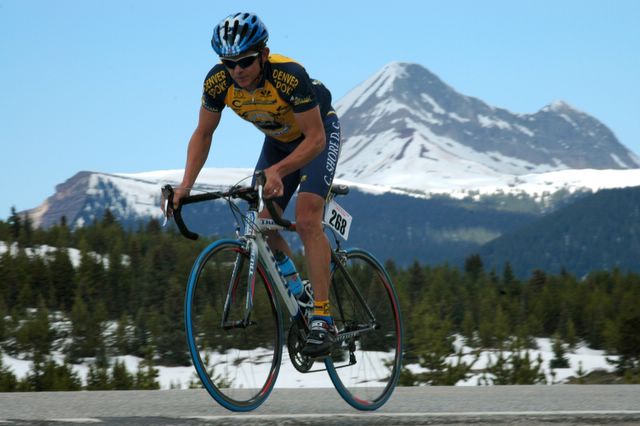

FLC alumni run away with Narrow Gauge 10-Mile titles
Sampson Sage, 23, put a surge on Branden Rakita near 32nd Street and that was all he needed to cruise to a win in the 28th annual Narrow Gauge 10-Mile Run on Sunday morning.
"The hills (North College and Rim Drive) weren't as bad this year because I didn't have a specific time goal," Sage said. "I just relaxed and took it smooth."
Sage, a Fort Lewis College graduate, ran cross country for five years and is now doing an internship with the Center for Southwest Studies.
Brianne Lippoldt, 24, another FLC alumni won the women's 10-mile race.
"I ran by myself the whole way," Lippoldt said. "I was in good shape for the hills, but the flats were pretty tough."
This was Lippoldt's second Narrow Gauge.
"I love this race," Lippoldt said. "I really just love the whole weekend."
David Rakita, 55, continued his streak by finishing the Narrow Gauge run all 28 times.
Rakita has been suffering a foot injury this year and felt fortunate to be able to run.
"I haven't had much training," Rakita said.
"This was more of a race just to finish rather than compete."
Over 28 years, Rakita has only lost 15 minutes from his 1977 time. Bobbie, David's wife, has also been part of the race for most of the 28 years as a volunteer.
"She's always been by my side," David said.
John Weswah won the 5K (3.1 miles) event in 16:51 while Molly Marquez led the women with a 23:20.
A total of 120 people ran the 10-mile event while 80 people ran the 5K.
Keith Baker juggled three balls while running the 10-miler.
"While juggling it's harder running downhill than it is up," Baker said.
"Especially when I drop the balls."
Baker estimates that he is only about one minute per mile slower while juggling.
Lori Elliff, 24, was trying to lower her 5K times since moving into an area with higher elevation.
"I used to run between 19 and 21 minutes, but today I ran 23:40," Elliff said.
A portion of the proceeds from the Narrow Gauge Run will go to the Durango Motorless Transit/FLC Cross Country Scholarship Fund.
With an endowment of $13,000, scholarships will be awarded to local high school seniors who wish to run cross country at Fort Lewis College.
Sunday morning's run was sponsored by Morehart Chevrolet, National King Coal, Steamworks and the Four Corners Heart Clinic.
Complete Narrow Gauge race results are posted at www. go-dmt.org.
Many individuals who completed the Iron Horse Bicycle Classic road race and the Narrow Gauge 10- Mile Run will be swimming today in the Narrow Horse 1,500-meter Swim at the Durango Recreation Center beginning at 9 a.m. today.
"The hills (North College and Rim Drive) weren't as bad this year because I didn't have a specific time goal," Sage said. "I just relaxed and took it smooth."
Sage, a Fort Lewis College graduate, ran cross country for five years and is now doing an internship with the Center for Southwest Studies.
Brianne Lippoldt, 24, another FLC alumni won the women's 10-mile race.
"I ran by myself the whole way," Lippoldt said. "I was in good shape for the hills, but the flats were pretty tough."
This was Lippoldt's second Narrow Gauge.
"I love this race," Lippoldt said. "I really just love the whole weekend."
David Rakita, 55, continued his streak by finishing the Narrow Gauge run all 28 times.
Rakita has been suffering a foot injury this year and felt fortunate to be able to run.
"I haven't had much training," Rakita said.
"This was more of a race just to finish rather than compete."
Over 28 years, Rakita has only lost 15 minutes from his 1977 time. Bobbie, David's wife, has also been part of the race for most of the 28 years as a volunteer.
"She's always been by my side," David said.
John Weswah won the 5K (3.1 miles) event in 16:51 while Molly Marquez led the women with a 23:20.
A total of 120 people ran the 10-mile event while 80 people ran the 5K.
Keith Baker juggled three balls while running the 10-miler.
"While juggling it's harder running downhill than it is up," Baker said.
"Especially when I drop the balls."
Baker estimates that he is only about one minute per mile slower while juggling.
Lori Elliff, 24, was trying to lower her 5K times since moving into an area with higher elevation.
"I used to run between 19 and 21 minutes, but today I ran 23:40," Elliff said.
A portion of the proceeds from the Narrow Gauge Run will go to the Durango Motorless Transit/FLC Cross Country Scholarship Fund.
With an endowment of $13,000, scholarships will be awarded to local high school seniors who wish to run cross country at Fort Lewis College.
Sunday morning's run was sponsored by Morehart Chevrolet, National King Coal, Steamworks and the Four Corners Heart Clinic.
Complete Narrow Gauge race results are posted at www. go-dmt.org.
Many individuals who completed the Iron Horse Bicycle Classic road race and the Narrow Gauge 10- Mile Run will be swimming today in the Narrow Horse 1,500-meter Swim at the Durango Recreation Center beginning at 9 a.m. today.
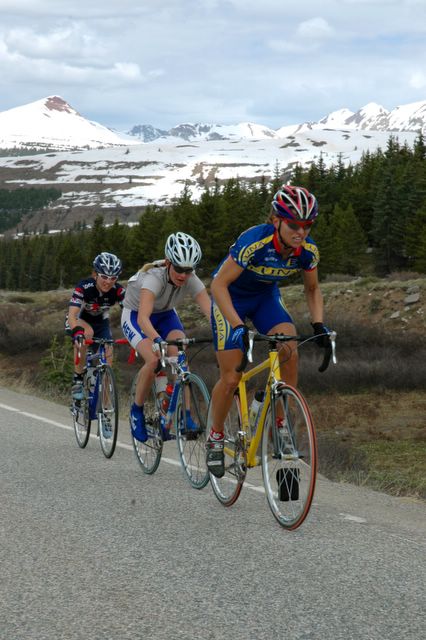
Sunday, May 29, 2005

Carter, Kingsley soar to victory in Iron Horse road race
Carter, Kingsley soar to victory in Iron Horse road race
By Marc Witkes
This report filed May 29, 2005
Michael Carter and Karen Kingsley won the 34th annual Iron Horse Bicycle Classic road race on Saturday, a Colorado monument with 5500 feet of climbing over its 47-mile course between Durango and Silverton.
The 42-year-old Carter (Colorado Velo) emerged triumphant from a three-man battle with Mitch Moreman and the apparently immortal Ned Overend, who were racing for the new Rocky Mountain Chocolate Factory team.
As Carter assaulted the 10,660-foot Coal Bank Hill, Moreman and Overend struggled to hold the pace. Carter reached the summit first, shot down the wicked descent, climbed alone up 10,900-foot Molas Pass and roared down into Silverton and victory in two hours, 18 minutes and six seconds.
"This win has been a long time coming," said the Littleton, Colorado, resident, who started racing here in 1983.
The 25-year-old Moreman - who was 10 years old when he watched his Durango neighbor Overend win the world mountain bike championship at Purgatory in 1991 - edged his 48-year-old teammate for the runner-up spot.
"It's awesome to be here today," Moreman said. "It's always been a dream of mine to race bikes, and it is just so cool to be able to come in the finish near Ned."
Overend, who has raced the Iron Horse 24 times and won it more than once, said he knew he was in for a rough ride when Carter punched it on Coal Bank.
"I just didn't have it today while going up Coal Bank," Overend said. "I knew I was in trouble."
Still, Overend clearly enjoyed himself.
"I really enjoy racing bikes and it's such a great sport," Overend said. "It's just part of my lifestyle. But it is such a serious commitment to get in shape for this thing each year."
Women sprint into Silverton
In the women's race, Kingsley, Shonny Vanlandingham (Luna) and Ann Trombley (Excel Sports), reached the summit of Molas Pass together, but Vanlandingham was first to the south end of Silverton.
Then Kingsley - who was trailing by 150 yards at the bottom of the winding descent - put the hammer down and beat Vanlandingham in an exciting sprint, crossing in 2:40:30. Trombley crossed third, 23 seconds later.
"I knew she (Kingsley) was closing on me at the finish," said Vanlandingham, a pro mountain biker who planned to race in Monday's cross-country. "She's so strong."
The 30-year-old Kingsley, from Ophir, Colorado, once raced with Geneviève Jeanson's now-defunct RONA squad, but now spends her days building furniture.
"I'm a climber," Kingsley said. "I used to race for RONA, but now I don't train much. I just do a lot of backcountry skiing in the winter, and that is such a good workout. I just race for the fun of it now."
Iron Horse Bicycle Classic
Durango-Silverton, CO. May 28
Men
1. Michael Carter, Colorado Velo, 2:18:06.8
2. Mitch Moreman, Rocky Mountain Chocolate Factory, 2:18:25.0
3. Ned Overend, Rocky Mountain Chocolate Factory, 2:18:25.6
4. Cody Peterson, 3D Racing-SRAM, 2:18:52.6
5. Jeremy Horgan-Kobelski, 2:18:53.6
1. Karen Kingsley, 2:40:30.7
2. Shonny Vanlandingham, Luna, 2:40:31.0
3. Ann Trombley, Excel Sports, 2:40:53
4. Jennifer Smith, Tokyo Joe's-Golite, 2:42:25.2
5. Mara Abbott, Whitman College, 2:43:35.3
Complete race results can be found at www.ironhorsebicycleclassic.com.
By Marc Witkes
This report filed May 29, 2005
Michael Carter and Karen Kingsley won the 34th annual Iron Horse Bicycle Classic road race on Saturday, a Colorado monument with 5500 feet of climbing over its 47-mile course between Durango and Silverton.
The 42-year-old Carter (Colorado Velo) emerged triumphant from a three-man battle with Mitch Moreman and the apparently immortal Ned Overend, who were racing for the new Rocky Mountain Chocolate Factory team.
As Carter assaulted the 10,660-foot Coal Bank Hill, Moreman and Overend struggled to hold the pace. Carter reached the summit first, shot down the wicked descent, climbed alone up 10,900-foot Molas Pass and roared down into Silverton and victory in two hours, 18 minutes and six seconds.
"This win has been a long time coming," said the Littleton, Colorado, resident, who started racing here in 1983.
The 25-year-old Moreman - who was 10 years old when he watched his Durango neighbor Overend win the world mountain bike championship at Purgatory in 1991 - edged his 48-year-old teammate for the runner-up spot.
"It's awesome to be here today," Moreman said. "It's always been a dream of mine to race bikes, and it is just so cool to be able to come in the finish near Ned."
Overend, who has raced the Iron Horse 24 times and won it more than once, said he knew he was in for a rough ride when Carter punched it on Coal Bank.
"I just didn't have it today while going up Coal Bank," Overend said. "I knew I was in trouble."
Still, Overend clearly enjoyed himself.
"I really enjoy racing bikes and it's such a great sport," Overend said. "It's just part of my lifestyle. But it is such a serious commitment to get in shape for this thing each year."
Women sprint into Silverton
In the women's race, Kingsley, Shonny Vanlandingham (Luna) and Ann Trombley (Excel Sports), reached the summit of Molas Pass together, but Vanlandingham was first to the south end of Silverton.
Then Kingsley - who was trailing by 150 yards at the bottom of the winding descent - put the hammer down and beat Vanlandingham in an exciting sprint, crossing in 2:40:30. Trombley crossed third, 23 seconds later.
"I knew she (Kingsley) was closing on me at the finish," said Vanlandingham, a pro mountain biker who planned to race in Monday's cross-country. "She's so strong."
The 30-year-old Kingsley, from Ophir, Colorado, once raced with Geneviève Jeanson's now-defunct RONA squad, but now spends her days building furniture.
"I'm a climber," Kingsley said. "I used to race for RONA, but now I don't train much. I just do a lot of backcountry skiing in the winter, and that is such a good workout. I just race for the fun of it now."
Iron Horse Bicycle Classic
Durango-Silverton, CO. May 28
Men
1. Michael Carter, Colorado Velo, 2:18:06.8
2. Mitch Moreman, Rocky Mountain Chocolate Factory, 2:18:25.0
3. Ned Overend, Rocky Mountain Chocolate Factory, 2:18:25.6
4. Cody Peterson, 3D Racing-SRAM, 2:18:52.6
5. Jeremy Horgan-Kobelski, 2:18:53.6
1. Karen Kingsley, 2:40:30.7
2. Shonny Vanlandingham, Luna, 2:40:31.0
3. Ann Trombley, Excel Sports, 2:40:53
4. Jennifer Smith, Tokyo Joe's-Golite, 2:42:25.2
5. Mara Abbott, Whitman College, 2:43:35.3
Complete race results can be found at www.ironhorsebicycleclassic.com.
Sunday, May 15, 2005
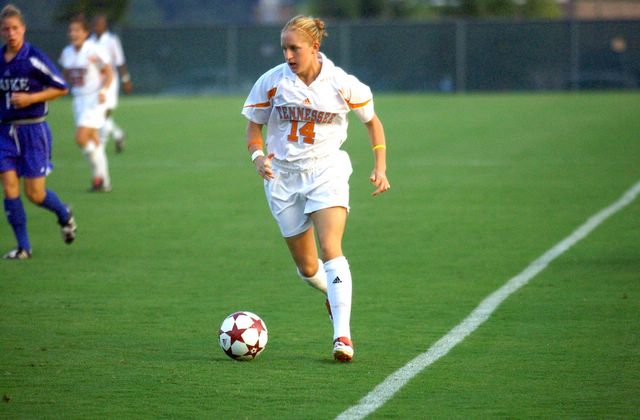
McGrath looks for next athletic challenge
Kristin McGrath, former Durango High School soccer and swimming standout, has a mantra.
"Go big or go home."
McGrath, 22, used those words throughout four years of athletic success at DHS from 1998-2001.
With a Southwestern League title in soccer during her freshman year and a fifth-place finish at the state swimming meet in the 100-meter breast stroke during her junior year, it would appear that McGrath was on the right track.
Besides her obvious athletic prowess, McGrath was also busy during her senior year in 2001 taking classes at Pueblo Community College so she could get a head start on her studies at the University of Tennessee.
After playing Division I soccer for four years at Tennessee and swimming her junior and senior years, McGrath, an exercise science major, is ready for more challenges and adventure.
Following last week's graduation with summa cum laude honors, McGrath is preparing for an internship with the prestigious Carmichael Training System in Colorado Springs.
"It's an intensive program and they teach you how to become a coach," said McGrath.
Besides working with Carmichael Training this summer, McGrath is hoping to begin a quest to become a professional triathlete.
So, while she will be learning how to coach others, McGrath will also be coaching herself with a heavy dose of swimming, biking and running.
It won't be an easy road. McGrath dislocated her knee during a soccer practice last October.
"I tore my ACL, partially tore my PCL and tore my LCL," McGrath explained. "I'm only able to run every other day right now because I'm still recovering from my injury."
Current DHS men's varsity basketball coach and McGrath's former soccer coach, Tim Fitzpatrick, is betting that McGrath will go far in whatever she chooses for her future.
"Kristin's desire to be the best in whatever she is doing and her work ethic is incredible," Fitzpatrick said. "Even as a high school freshman, she had a great understanding of fitness and the necessary training."
George Philpot, DHS swim coach for 10 years, has known Kristin since she was a girl.
"She's a tenacious young lady," Philpot said. "Kristin is very dedicated and if anybody can become a professional triathlete, she can."
All work and no play might make Jill a dull girl but McGrath has had her share of fun as well.
Last month she went with friends to watch the Tour of Georgia.
"We had an awesome time," McGrath said. "I saw Lance Armstrong and Tom Danielson."
Besides doing a little spectating, McGrath has done her share of cycling in the Smoky Mountains near school.
"Well, there's this 50-mile ride that we do sometimes," McGrath explained.
The climbs and the mountains in Tennessee don't really compare to Coal Bank and Molas, but hopefully they will be enough preparation for the Iron Horse Bicycle Classic in two weeks.
It will be easy to spot McGrath, who will be in town to ride to Silverton and visit with her parents Bob and Scattie: She'll be riding a lime green Cannondale.
"Of course her mother and I are quite proud of her," Bob said.
"She doesn't like anybody in front of her but in a nice way."
Marc Witkes is president of Durango Motorless Transit. Reach him at 247-3116.
"Go big or go home."
McGrath, 22, used those words throughout four years of athletic success at DHS from 1998-2001.
With a Southwestern League title in soccer during her freshman year and a fifth-place finish at the state swimming meet in the 100-meter breast stroke during her junior year, it would appear that McGrath was on the right track.
Besides her obvious athletic prowess, McGrath was also busy during her senior year in 2001 taking classes at Pueblo Community College so she could get a head start on her studies at the University of Tennessee.
After playing Division I soccer for four years at Tennessee and swimming her junior and senior years, McGrath, an exercise science major, is ready for more challenges and adventure.
Following last week's graduation with summa cum laude honors, McGrath is preparing for an internship with the prestigious Carmichael Training System in Colorado Springs.
"It's an intensive program and they teach you how to become a coach," said McGrath.
Besides working with Carmichael Training this summer, McGrath is hoping to begin a quest to become a professional triathlete.
So, while she will be learning how to coach others, McGrath will also be coaching herself with a heavy dose of swimming, biking and running.
It won't be an easy road. McGrath dislocated her knee during a soccer practice last October.
"I tore my ACL, partially tore my PCL and tore my LCL," McGrath explained. "I'm only able to run every other day right now because I'm still recovering from my injury."
Current DHS men's varsity basketball coach and McGrath's former soccer coach, Tim Fitzpatrick, is betting that McGrath will go far in whatever she chooses for her future.
"Kristin's desire to be the best in whatever she is doing and her work ethic is incredible," Fitzpatrick said. "Even as a high school freshman, she had a great understanding of fitness and the necessary training."
George Philpot, DHS swim coach for 10 years, has known Kristin since she was a girl.
"She's a tenacious young lady," Philpot said. "Kristin is very dedicated and if anybody can become a professional triathlete, she can."
All work and no play might make Jill a dull girl but McGrath has had her share of fun as well.
Last month she went with friends to watch the Tour of Georgia.
"We had an awesome time," McGrath said. "I saw Lance Armstrong and Tom Danielson."
Besides doing a little spectating, McGrath has done her share of cycling in the Smoky Mountains near school.
"Well, there's this 50-mile ride that we do sometimes," McGrath explained.
The climbs and the mountains in Tennessee don't really compare to Coal Bank and Molas, but hopefully they will be enough preparation for the Iron Horse Bicycle Classic in two weeks.
It will be easy to spot McGrath, who will be in town to ride to Silverton and visit with her parents Bob and Scattie: She'll be riding a lime green Cannondale.
"Of course her mother and I are quite proud of her," Bob said.
"She doesn't like anybody in front of her but in a nice way."
Marc Witkes is president of Durango Motorless Transit. Reach him at 247-3116.
Wednesday, May 11, 2005
Trailrunning the Four Corners
From Sand Canyon to Squaw Peak, Kaibab to Kokapelli, Alien Run to Animas City Mountain, the Four Corners is doodled with trails that inspire runners to leave hot, hard asphalt for the cool and softness of terra firma. Trailrunners are challenged to find a better area to enjoy their fast-growing sport. Indeed, trail running has never been more popular. According to the Sporting Goods Manufacturing Association, trail running participation has grown by 16.4 percent over the past five years. In 2003 alone, more than six million people ages 6 and over ran on trails at least once. That’s a lot of shoe rubber.
In 13 years of running and traveling the Four Corners for races and training runs, I am convinced that trail running just doesn’t get any better than our backyard. With topography ranging from desert to mountain and geography from tundra to slickrock, living in the Four Corners means that we are never far from a perfect trail run.
PLACES TO RUN
PINNING DOWN THE BEST trails to run in the Four Corners is an impossible exercise. The countless miles of trails are as diverse as the people who run on them. With diversity in mind, here is a sampling of a good few, most of which I’ve had the pleasure of running.
COLORADO
CONDITIONING TIPS
"Start out slow and taper" is the ultra-runner’s signature line but the same can be applied to trail running. If you’ve run only on the roads, running trails will take a little getting used to. Pay attention to the terrain so you won’t trip over obstacles such as a rock or a root. "Power-hike," or hike powerfully rather than run, the steep uphill sections. Cross-train with a road or mountain bicycle to build strong quads, which are essential for running uphill. Pay attention to your form by eliminating any extra movement with your arms. Relax! Go a little farther or a little faster each time you hit the trails. Set a reasonable goal for yourself so that you’ll stay motivated to train. How about completing a Double Hogsback or a sub-four hour Imogene by the end of the summer?
To gain strength and power, run fast but short — 1/4- to 1/2-mile — uphill legs, resting during jogs downhill, and repeat. On a track, include interval sprint-and-jog sessions. Warm-up and cool-down to decrease injury risk. — M.W.
The Durango Mountain Park is less than a mile west of downtown Durango. The rolling trails include the dramatic Hogsback, which is obvious from its name. Even the fittest runner’s legs will be reduced to Jell-O climbing the Hog. Be careful on the way down, especially in the summer, when the trail is dry, dusty and slippery. There are many access points but my favorite is on the western edge of Avenida del Sol, just north of the 9th Avenue Bridge.
Joe Keck, former mayor of Cortez, frequents Sand Canyon, 14 miles southwest of Cortez on McElmo Creek Road. "The area has pinion, juniper and red rocks along its trails," he says, noting the area is all BLM.
It is possible to run 468 miles of the Colorado Trail from Durango but several shorter options are available. Take 25th Street to Junction Street to access the trail’s Durango terminus. A good eight-mile run with spectacular views of Durango is out-and-back to Gudy’s Rest, a good push out but a downhill coast on the return. Other good Colorado Trail access points include Lightener Creek, Kennebec Pass and Molas Pass.
NEW MEXICO
My wife Cathy Tibbetts has been running Farmington gems Pi`F1ion Mesa and the Kinsey Trail for 20 years. "With Pi`F1ion Mesa, you can run a 12-mile loop or an 18-miler but it might be a good idea to go with someone who is familiar with the area. It’s easy to lose your way in this maze but the rock formations are dramatic. I’ve named two of them, ‘Ugly’ and ‘Nasty,’ because of the steep terrain that reduces most runners to a quad-busting power hike."
The Kinsey trailhead, part of the Glade Trail System, is located at the north end of Foothills Drive. "I can run this one all year as it’s almost always dry," she says.
UTAH
Ian Torrence, a Grand Slam finisher (four 100-mile trail races in the same summer) shares his favorite Moab trail runs. "Gemini Bridges starts on 191 north of Moab and it’s about a 16-mile run, out and back ... It is 4 x 4 roads rather than trails, but a beautiful area."
Other Torrence favorites are Steel Bender/Flat Pass, Behind-the-Rocks, Pritchett Arch, Hunter Canyon Loop and unnamed trails near the golf course.
Durango trail runners John McAward and Brett Gosney make frequent trips to the Joint Trail in Canyonlands National Park. "The terrain is varied," McAward said. "There are streams, sand, ladders, rocks and meadows."
"The Joint Trail is a narrow seam that is part of a larger 22-mile loop," adds Gosney. "The trails are well-marked and you can get a map from the National Park Service."
ARIZONA
In Prescott, Charlie Schultzof the Arizona Road Racers likes the Peavine Trail and Groom Creek Loop Trail, a short distance from town. "The Peavine Trail was opened in early 1999," Schultz said. "It is a trail that has been developed over the old Peavine Railroad right-of-way that is historically significant to Prescott and the surrounding areas `85 On a clear day you can see the San Francisco Peaks, the Santa Maria Mountains, south into the Bradshaws and across to the Mazatzals and Pine Mountain from Groom Creek."
Flagstaff’s Matthew Holton, a member and coach with the Northern Arizona Trailrunners Association, shares a favorite run. "My favorite run is up to Fisher Point where there is a lookout that is probably 6 miles south of downtown Flagstaff." Fisher Point overlooks a dramatic slot canyon in one direction and the San Francisco Peaks in the other. "I also like running on top of Mars Hill," Holton adds, "where the Lowell Observatory is located."
There is only one way to properly see the Grand Canyon. Yes, run it. Take the park service shuttle from the main lodge to the Kaibab trailhead on the South Rim and run down to the Colorado River and back up the Bright Angel Trail for a total of 14 miles. It’s a steep pull back up but nothing a little "power hiking" can’t manage. In "younger" days I reveled in going from the South Rim to the North Rim and back in one day, all in about 14 hours. Now I prefer to run from the South Rim with a change of clothes and stay in the Grand Canyon Lodge North rim — and run back the next day.
RACES
THE FOLLOWING RACES range in size from under 50 runners to several hundred. They also offer a variety of distances, places and terrain, from ultramarathons (more than 26.2 miles) to short distances. You may recognize some of the races but I hope that there are some that are new to you.
ARIZONA
The Soulstice Mountain Run (June 18) in Flagstaff was first held in 1997, organized by local race director Bill Ring. Only 34 runners ran the challenging 11 1/2-mile course that includes two 800-feet-plus ascents, but in 2003 and 2004, the race reached its cap of 200.
Neil Weintraub, a veteran of more than 100 races, claims the Soulstice as his favorite. "There are incredible views of the San Francisco Peaks during the second half of the race," he explains, "and the golden aspens mixed with the tall ponderosas add to the beauty." www.natra.org.
The Big Tesuque (October 8), an 11.6-mile trail run, draws about 100 runners to Santa Fe. "It’s in the fall, just between the aspens at the height of their color and the start of snow," said Santa Fe Striders running club president, Kris Kern. "We’ve had snow a few times, but the last few years the colors have been brilliant. We donate part of the race proceeds to Wing of America, a Native American youth running program. www.santafestriders.org
The Arizona White Mountain Marathon, Half and 5K fun run and walk (August 27) takes place on the TRACKS trail system within the Apache-Sitgreaves National Forest near Show Lo. In 2002, when the massive forest fires hit the forests near Show Lo, participation was a disaster. But last year, the event came back strong with around 60 runners. www.rndrunning.com.
In 2004, nearly 350 people participated in the Sacred Mountain 10K/5K Prayer Run (June 5) and 2K fun run/walk near Flagstaff. Dorothy Gishie, program coordinator for Native Americans for Community Action, Inc., and one of the race coordinators, expects 500 runners for this year. "The course weaves through unpaved dirt and cinder trails within the Coconino National Forest, Gishie said. " The San Francisco Peaks, mountains held sacred by Native Peoples, provide a scenic background. The course climbs to an elevation of 7,200 feet from a start/finish of 6,950 feet." www.nacainc.org
COLORADO
Ouray resident and former Hardrock 100 race winner, Rick Trujillo, trained on Imogene Pass in 1974, and the next year, the Imogene Pass Run (Sept. 10) became an official race. Today, 1,200 walkers and runners make the trek from Ouray to Telluride through historic Tomboy and Camp Bird. www.imogenerun.com.
The Lake City 50-Mile (June 18), now in its 11th running, is among the toughest events in the United States. "There is over 12,500-feet of climb and descent all above 8,600’ and lots of it above timberline," said Race Director Jerry Gray. "The course is a counter-clockwise loop starting in the town park on Engineer Pass Road, over Alpine Gulch, into Williams Creek, up Wagner Gulch and into the Carson town site.
Vic Rudolph, Durango speedster, ran Lake City last year. "It was the hardest race I have done so far," Rudolph said. "It was a fabulous event; beautiful country, great support and weather. I would recommend it to anyone." www.lakecity50.com.
The Spring Desert Ultra three-day running festival in Fruita (April 22-24,) has 50-, 25-, 10- and 5-mile events. The courses are rocky, dry, and challenging but the scenery is otherworldly. Reid Delman, festival organizer, says that people are often taken by surprise with the race’s difficulty. "The elevation ranges from only 4,600 to 5,400 feet but there is actually 4,000-feet of climb for each 25-mile loop," he said.
My friend, Greg, poked fun at me last year and called me "grandma!" as I picked through the difficult terrain. I had the last laugh when he became dehydrated during the last few miles of the race and I skipped by him on the flat section. www.geminiadventures.com.
NEW MEXICO
La Luz Trail Run (Aug. 7), featured in the March/April 2005 issue, is Albuquerque’s premier running event. This annual event is limited to 400 runners. The race may be filled this year but be prepared for next year by tapping www.aroadrun.org.
UTAH
Moab’s Alpine to Slickrock 50-mile (September 24) is set in the La Sal Mountains and, according to one of its veteran racers, Ian Torrence, has an "awesome single track." This race begins with a 4,000-foot climb from Pack Creek. www.mas50.com.
RUNNING CLUBS
ALL RUNNING CLUBS, like their runners, go through peaks and valleys. Farmington and Cortez, for example, have both had strong running clubs but neither exist today. If you have an interest in joining a running club or finding out about the clubs in your area, drop by your local sporting goods store and ask around or hit the internet and search. Or, better yet, go running and sooner or later you’ll encounter other runners. It’s that easy — for the most part trail runners are easy-going folks.
COLORADO
Durango Motorless Transit (DMT) is the Four Corners largest running club. DMT sponsors low-key group trail runs every Thursday night at 6 p.m. DMT also organizes many area trail races. See www.go-dmt.org or call me at (970) 247-3116. I am its president.
"The Crested Butte Mountain Runners have been around for about 25 years and we organize a series of fun runs throughout the summer, starting in mid-May and ending in late September," said Martin Catmur, who organizes the Runners.www.visitcrestedbutte.com/mtnrunners/
ARIZONA
Flagstaff is home to the Northern Arizona Trailrunners. NATRA has two weekly runs, one on Monday and another on Saturday. The Monday run is a 4.5-mile loop that starts from Buffalo Park and heads up toward Elden. The run on Saturday varies. www.natra.org.
NEW MEXICO
Albuquerque Road Runners (ARR), part of the Road Runners Clubs of America, does a weekly trail run in the foothills on Monday evenings starting from the parking lot at the east end of Indian School Road. "There is an extensive network of trails along the base of the Sandia Mountains that runs from I-40 north for about 10 miles or more," said Roxanne Miler, ARR president. "These trails also connect to the crest trail and trails on the east side of the mountains so that you can do a relatively tame workout with small hills or you can go for a 3,000 foot climb." www.aroadrun.org
"The Santa Fe Striders have weekly group training runs that are usually on trails," said president Kris Kern. "This is such a great place for that and the higher trails can get to several peaks above 12,000-feet in as little as six miles of running.
UTAH
The Rimrock Roadrunners, part of the Road Runners Clubs of America, is a small organization in Moab which puts on the Moab Half-Marathon, Winter Sun 10K and other races. www.moabhalfmarathon.org.
Marc Witkes grew up running with the Central Massachussetts Striders. He has competed in hundreds of events around the country and claims a win of the Ignacio Cabin Fever Fest in the early ’90s. Having just completed the Arizona Ironman, Witkes is hoping for a little down time but he fears that his wife will convince him to pace her for 50 miles during the Leadville Trail 100-mile.
In 13 years of running and traveling the Four Corners for races and training runs, I am convinced that trail running just doesn’t get any better than our backyard. With topography ranging from desert to mountain and geography from tundra to slickrock, living in the Four Corners means that we are never far from a perfect trail run.
PLACES TO RUN
PINNING DOWN THE BEST trails to run in the Four Corners is an impossible exercise. The countless miles of trails are as diverse as the people who run on them. With diversity in mind, here is a sampling of a good few, most of which I’ve had the pleasure of running.
COLORADO
CONDITIONING TIPS
"Start out slow and taper" is the ultra-runner’s signature line but the same can be applied to trail running. If you’ve run only on the roads, running trails will take a little getting used to. Pay attention to the terrain so you won’t trip over obstacles such as a rock or a root. "Power-hike," or hike powerfully rather than run, the steep uphill sections. Cross-train with a road or mountain bicycle to build strong quads, which are essential for running uphill. Pay attention to your form by eliminating any extra movement with your arms. Relax! Go a little farther or a little faster each time you hit the trails. Set a reasonable goal for yourself so that you’ll stay motivated to train. How about completing a Double Hogsback or a sub-four hour Imogene by the end of the summer?
To gain strength and power, run fast but short — 1/4- to 1/2-mile — uphill legs, resting during jogs downhill, and repeat. On a track, include interval sprint-and-jog sessions. Warm-up and cool-down to decrease injury risk. — M.W.
The Durango Mountain Park is less than a mile west of downtown Durango. The rolling trails include the dramatic Hogsback, which is obvious from its name. Even the fittest runner’s legs will be reduced to Jell-O climbing the Hog. Be careful on the way down, especially in the summer, when the trail is dry, dusty and slippery. There are many access points but my favorite is on the western edge of Avenida del Sol, just north of the 9th Avenue Bridge.
Joe Keck, former mayor of Cortez, frequents Sand Canyon, 14 miles southwest of Cortez on McElmo Creek Road. "The area has pinion, juniper and red rocks along its trails," he says, noting the area is all BLM.
It is possible to run 468 miles of the Colorado Trail from Durango but several shorter options are available. Take 25th Street to Junction Street to access the trail’s Durango terminus. A good eight-mile run with spectacular views of Durango is out-and-back to Gudy’s Rest, a good push out but a downhill coast on the return. Other good Colorado Trail access points include Lightener Creek, Kennebec Pass and Molas Pass.
NEW MEXICO
My wife Cathy Tibbetts has been running Farmington gems Pi`F1ion Mesa and the Kinsey Trail for 20 years. "With Pi`F1ion Mesa, you can run a 12-mile loop or an 18-miler but it might be a good idea to go with someone who is familiar with the area. It’s easy to lose your way in this maze but the rock formations are dramatic. I’ve named two of them, ‘Ugly’ and ‘Nasty,’ because of the steep terrain that reduces most runners to a quad-busting power hike."
The Kinsey trailhead, part of the Glade Trail System, is located at the north end of Foothills Drive. "I can run this one all year as it’s almost always dry," she says.
UTAH
Ian Torrence, a Grand Slam finisher (four 100-mile trail races in the same summer) shares his favorite Moab trail runs. "Gemini Bridges starts on 191 north of Moab and it’s about a 16-mile run, out and back ... It is 4 x 4 roads rather than trails, but a beautiful area."
Other Torrence favorites are Steel Bender/Flat Pass, Behind-the-Rocks, Pritchett Arch, Hunter Canyon Loop and unnamed trails near the golf course.
Durango trail runners John McAward and Brett Gosney make frequent trips to the Joint Trail in Canyonlands National Park. "The terrain is varied," McAward said. "There are streams, sand, ladders, rocks and meadows."
"The Joint Trail is a narrow seam that is part of a larger 22-mile loop," adds Gosney. "The trails are well-marked and you can get a map from the National Park Service."
ARIZONA
In Prescott, Charlie Schultzof the Arizona Road Racers likes the Peavine Trail and Groom Creek Loop Trail, a short distance from town. "The Peavine Trail was opened in early 1999," Schultz said. "It is a trail that has been developed over the old Peavine Railroad right-of-way that is historically significant to Prescott and the surrounding areas `85 On a clear day you can see the San Francisco Peaks, the Santa Maria Mountains, south into the Bradshaws and across to the Mazatzals and Pine Mountain from Groom Creek."
Flagstaff’s Matthew Holton, a member and coach with the Northern Arizona Trailrunners Association, shares a favorite run. "My favorite run is up to Fisher Point where there is a lookout that is probably 6 miles south of downtown Flagstaff." Fisher Point overlooks a dramatic slot canyon in one direction and the San Francisco Peaks in the other. "I also like running on top of Mars Hill," Holton adds, "where the Lowell Observatory is located."
There is only one way to properly see the Grand Canyon. Yes, run it. Take the park service shuttle from the main lodge to the Kaibab trailhead on the South Rim and run down to the Colorado River and back up the Bright Angel Trail for a total of 14 miles. It’s a steep pull back up but nothing a little "power hiking" can’t manage. In "younger" days I reveled in going from the South Rim to the North Rim and back in one day, all in about 14 hours. Now I prefer to run from the South Rim with a change of clothes and stay in the Grand Canyon Lodge North rim — and run back the next day.
RACES
THE FOLLOWING RACES range in size from under 50 runners to several hundred. They also offer a variety of distances, places and terrain, from ultramarathons (more than 26.2 miles) to short distances. You may recognize some of the races but I hope that there are some that are new to you.
ARIZONA
The Soulstice Mountain Run (June 18) in Flagstaff was first held in 1997, organized by local race director Bill Ring. Only 34 runners ran the challenging 11 1/2-mile course that includes two 800-feet-plus ascents, but in 2003 and 2004, the race reached its cap of 200.
Neil Weintraub, a veteran of more than 100 races, claims the Soulstice as his favorite. "There are incredible views of the San Francisco Peaks during the second half of the race," he explains, "and the golden aspens mixed with the tall ponderosas add to the beauty." www.natra.org.
The Big Tesuque (October 8), an 11.6-mile trail run, draws about 100 runners to Santa Fe. "It’s in the fall, just between the aspens at the height of their color and the start of snow," said Santa Fe Striders running club president, Kris Kern. "We’ve had snow a few times, but the last few years the colors have been brilliant. We donate part of the race proceeds to Wing of America, a Native American youth running program. www.santafestriders.org
The Arizona White Mountain Marathon, Half and 5K fun run and walk (August 27) takes place on the TRACKS trail system within the Apache-Sitgreaves National Forest near Show Lo. In 2002, when the massive forest fires hit the forests near Show Lo, participation was a disaster. But last year, the event came back strong with around 60 runners. www.rndrunning.com.
In 2004, nearly 350 people participated in the Sacred Mountain 10K/5K Prayer Run (June 5) and 2K fun run/walk near Flagstaff. Dorothy Gishie, program coordinator for Native Americans for Community Action, Inc., and one of the race coordinators, expects 500 runners for this year. "The course weaves through unpaved dirt and cinder trails within the Coconino National Forest, Gishie said. " The San Francisco Peaks, mountains held sacred by Native Peoples, provide a scenic background. The course climbs to an elevation of 7,200 feet from a start/finish of 6,950 feet." www.nacainc.org
COLORADO
Ouray resident and former Hardrock 100 race winner, Rick Trujillo, trained on Imogene Pass in 1974, and the next year, the Imogene Pass Run (Sept. 10) became an official race. Today, 1,200 walkers and runners make the trek from Ouray to Telluride through historic Tomboy and Camp Bird. www.imogenerun.com.
The Lake City 50-Mile (June 18), now in its 11th running, is among the toughest events in the United States. "There is over 12,500-feet of climb and descent all above 8,600’ and lots of it above timberline," said Race Director Jerry Gray. "The course is a counter-clockwise loop starting in the town park on Engineer Pass Road, over Alpine Gulch, into Williams Creek, up Wagner Gulch and into the Carson town site.
Vic Rudolph, Durango speedster, ran Lake City last year. "It was the hardest race I have done so far," Rudolph said. "It was a fabulous event; beautiful country, great support and weather. I would recommend it to anyone." www.lakecity50.com.
The Spring Desert Ultra three-day running festival in Fruita (April 22-24,) has 50-, 25-, 10- and 5-mile events. The courses are rocky, dry, and challenging but the scenery is otherworldly. Reid Delman, festival organizer, says that people are often taken by surprise with the race’s difficulty. "The elevation ranges from only 4,600 to 5,400 feet but there is actually 4,000-feet of climb for each 25-mile loop," he said.
My friend, Greg, poked fun at me last year and called me "grandma!" as I picked through the difficult terrain. I had the last laugh when he became dehydrated during the last few miles of the race and I skipped by him on the flat section. www.geminiadventures.com.
NEW MEXICO
La Luz Trail Run (Aug. 7), featured in the March/April 2005 issue, is Albuquerque’s premier running event. This annual event is limited to 400 runners. The race may be filled this year but be prepared for next year by tapping www.aroadrun.org.
UTAH
Moab’s Alpine to Slickrock 50-mile (September 24) is set in the La Sal Mountains and, according to one of its veteran racers, Ian Torrence, has an "awesome single track." This race begins with a 4,000-foot climb from Pack Creek. www.mas50.com.
RUNNING CLUBS
ALL RUNNING CLUBS, like their runners, go through peaks and valleys. Farmington and Cortez, for example, have both had strong running clubs but neither exist today. If you have an interest in joining a running club or finding out about the clubs in your area, drop by your local sporting goods store and ask around or hit the internet and search. Or, better yet, go running and sooner or later you’ll encounter other runners. It’s that easy — for the most part trail runners are easy-going folks.
COLORADO
Durango Motorless Transit (DMT) is the Four Corners largest running club. DMT sponsors low-key group trail runs every Thursday night at 6 p.m. DMT also organizes many area trail races. See www.go-dmt.org or call me at (970) 247-3116. I am its president.
"The Crested Butte Mountain Runners have been around for about 25 years and we organize a series of fun runs throughout the summer, starting in mid-May and ending in late September," said Martin Catmur, who organizes the Runners.www.visitcrestedbutte.com/mtnrunners/
ARIZONA
Flagstaff is home to the Northern Arizona Trailrunners. NATRA has two weekly runs, one on Monday and another on Saturday. The Monday run is a 4.5-mile loop that starts from Buffalo Park and heads up toward Elden. The run on Saturday varies. www.natra.org.
NEW MEXICO
Albuquerque Road Runners (ARR), part of the Road Runners Clubs of America, does a weekly trail run in the foothills on Monday evenings starting from the parking lot at the east end of Indian School Road. "There is an extensive network of trails along the base of the Sandia Mountains that runs from I-40 north for about 10 miles or more," said Roxanne Miler, ARR president. "These trails also connect to the crest trail and trails on the east side of the mountains so that you can do a relatively tame workout with small hills or you can go for a 3,000 foot climb." www.aroadrun.org
"The Santa Fe Striders have weekly group training runs that are usually on trails," said president Kris Kern. "This is such a great place for that and the higher trails can get to several peaks above 12,000-feet in as little as six miles of running.
UTAH
The Rimrock Roadrunners, part of the Road Runners Clubs of America, is a small organization in Moab which puts on the Moab Half-Marathon, Winter Sun 10K and other races. www.moabhalfmarathon.org.
Marc Witkes grew up running with the Central Massachussetts Striders. He has competed in hundreds of events around the country and claims a win of the Ignacio Cabin Fever Fest in the early ’90s. Having just completed the Arizona Ironman, Witkes is hoping for a little down time but he fears that his wife will convince him to pace her for 50 miles during the Leadville Trail 100-mile.
Tuesday, May 03, 2005
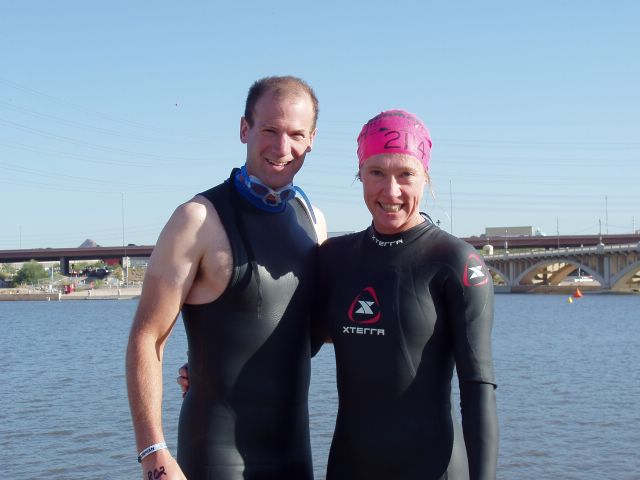
Local riders go for broke in time trials
It's the stuff that legends are made of:
Ned Overend, former world champion, once bicycled 9.5 miles from the corner of Roosa Avenue and U.S. Highway 160 to the power lines on top of Hesperus Hill in 28 minutes and 45 seconds.
Tom Danielson, recent Tour de Georgia winner, rode 5.8 miles from Cascade Village to the top of Coal Bank Pass in 24 minutes and 4 seconds.
These are two records from the Durango Wheel Club's Thursday night time trials, but most of the 19 people who competed in last week's Baker's Bridge event weren't concerned with trying to break any records.
Time trials are simple, painful, elegant exercise. Bicycle racers hammer on a predetermined course against the clock and against the other riders. Most are tucked in an aerodynamic position with the help of special handlebars from the start. Less upright body mass translates into less wind resistance and faster times.
There is no drafting (following closely behind another cyclist and using him to break the wind) here. Riders begin at 30-second intervals and race by themselves.
If the person riding behind you catches you, that puts you 30 seconds down. Racers are timed across a finish line, and allowances are made for all of the different starting times.
Jared Pitroski, a 22 year-old Fort Lewis College student who races on the collegiate team, milled around before last Thursday's time trial start just north of the Iron Horse on U.S. Highway 550. It was Pitroski's first time trial of the year, and he figured it would be good preparation for a summer of racing.
Around 5:45 p.m., Todd Beattie, ride organizer, called the racers together.
"Who wants to go first?" Beattie asked.
Linda Paris, 42, volunteered to be the sacrificial lamb chased by the hungry wolves.
"Five… four… three… two… one...," chanted timing volunteer and long-time Durango Wheel Club member Ken Freudenberg, and Paris was off for 17.5 miles of pain and fun.
Thursday's "P" shaped course took riders north of Durango on U.S. Highway 550, to County Road 250, across Baker's Bridge and south on East Animas Road to a finish on the west side of Trimble Lane near the railroad tracks.
Last year Cody Peterson set a blazing record of 37 minutes and 33 seconds on this course.
Todd Wells, 2004 mountain bike Olympian, has already raced 30 days this year. He was getting tuned up for World Cup races in Belgium and the summer's NORBA races.
With a swirling wind that made riders always feel like they were always battling a headwind, competitors continued to take off at 30-second intervals.
Wells took the penultimate position with Gilbert chasing from the final spot. Traditionally the faster riders are the last ones off.
I had it easy and drove with Beattie along the course. We offered encouragement and a little applause, although not many riders acknowledged our presence. This was serious stuff and most riders had a look of pain on their faces.
While riding behind Mitch Moreman on East Animas, Beattie clocked him at 36 mph.
"This is great training, and we have everyone here from casual riders to professionals," Beattie said. "It's good practice for racing because you have people chasing you and everybody is a little nervous."
For more information on the time trials, call Beattie at 946-1993 or go to www.durangowheelclub.com.
Ned Overend, former world champion, once bicycled 9.5 miles from the corner of Roosa Avenue and U.S. Highway 160 to the power lines on top of Hesperus Hill in 28 minutes and 45 seconds.
Tom Danielson, recent Tour de Georgia winner, rode 5.8 miles from Cascade Village to the top of Coal Bank Pass in 24 minutes and 4 seconds.
These are two records from the Durango Wheel Club's Thursday night time trials, but most of the 19 people who competed in last week's Baker's Bridge event weren't concerned with trying to break any records.
Time trials are simple, painful, elegant exercise. Bicycle racers hammer on a predetermined course against the clock and against the other riders. Most are tucked in an aerodynamic position with the help of special handlebars from the start. Less upright body mass translates into less wind resistance and faster times.
There is no drafting (following closely behind another cyclist and using him to break the wind) here. Riders begin at 30-second intervals and race by themselves.
If the person riding behind you catches you, that puts you 30 seconds down. Racers are timed across a finish line, and allowances are made for all of the different starting times.
Jared Pitroski, a 22 year-old Fort Lewis College student who races on the collegiate team, milled around before last Thursday's time trial start just north of the Iron Horse on U.S. Highway 550. It was Pitroski's first time trial of the year, and he figured it would be good preparation for a summer of racing.
Around 5:45 p.m., Todd Beattie, ride organizer, called the racers together.
"Who wants to go first?" Beattie asked.
Linda Paris, 42, volunteered to be the sacrificial lamb chased by the hungry wolves.
"Five… four… three… two… one...," chanted timing volunteer and long-time Durango Wheel Club member Ken Freudenberg, and Paris was off for 17.5 miles of pain and fun.
Thursday's "P" shaped course took riders north of Durango on U.S. Highway 550, to County Road 250, across Baker's Bridge and south on East Animas Road to a finish on the west side of Trimble Lane near the railroad tracks.
Last year Cody Peterson set a blazing record of 37 minutes and 33 seconds on this course.
Todd Wells, 2004 mountain bike Olympian, has already raced 30 days this year. He was getting tuned up for World Cup races in Belgium and the summer's NORBA races.
With a swirling wind that made riders always feel like they were always battling a headwind, competitors continued to take off at 30-second intervals.
Wells took the penultimate position with Gilbert chasing from the final spot. Traditionally the faster riders are the last ones off.
I had it easy and drove with Beattie along the course. We offered encouragement and a little applause, although not many riders acknowledged our presence. This was serious stuff and most riders had a look of pain on their faces.
While riding behind Mitch Moreman on East Animas, Beattie clocked him at 36 mph.
"This is great training, and we have everyone here from casual riders to professionals," Beattie said. "It's good practice for racing because you have people chasing you and everybody is a little nervous."
For more information on the time trials, call Beattie at 946-1993 or go to www.durangowheelclub.com.
Thursday, April 28, 2005
Farmington athlete wins age group in inaugural Arizona Ironman
Farmington residents Cathy Tibbetts, 50, and Keith Peterson, 55, were among 1,682 finishers at the inaugural Ironman Arizona Triathlon in Tempe on Sunday.
Tibbetts finished the 2.4-mile swim, 112-mile bike, and 26.2-mile run in 12 hours, 18 minutes, and 52 seconds, while earning a first-place age group finish and a slot in October's Hawaii Ironman. Peterson finished in 15:10.53. It was Tibbetts’ first Ironman and Peterson’s third.
Tibbetts, an optometrist, has been running for nearly 30 years but she only recently started focusing on swimming and biking. She rode her first bicycle century in Grand Junction in October and she started swimming with the Farmington Masters program in the fall.
“I never really gave much thought to doing an Ironman, but last summer when I heard that there was going to be one in Arizona, I just decided to go for it,” Tibbetts said. “It was challenging having to train indoors for so much of the Farmington winter, but I was able to go to Arizona a few times to get in some long rides.”
Peterson, a sales manager at Webb Chevrolet, went into Saturday's race with few expectations.
“I just want to have fun,” Peterson said. “I want to have a good race and I want to be able to converse with people on the run.”
Peterson's wife, Debbie, and their daughter, Bree Ann, accompanied him to the race.
“We also visited my other daughter, who lives in Phoenix, and made it a nice family weekend,” Peterson said. “The race venue was set-up with multiple loops, it was spectator-friendly and I got to see everyone several times.”
Tibbetts set three different alarms in her hotel room the night before the race. With months of preparation behind her, she was taking no chances. While Tibbetts made it to the swim start with plenty of time to spare, she still had her share of difficulties.
“It was a mass start and I got kicked and pushed around quite a bit,” Tibbetts said. “I was glad to get out of the Tempe Town Lake and onto dry land for the bike section.”
Peterson, who is not a strong swimmer, was also pleased to finish that section, but his real challenges began when he hopped on his bicycle.
“I made a cardinal sin because I tried something new on race day,” Peterson divulged. “I heard that all of the pros were using salt tablets so I tried that, but my stomach became upset and I couldn't get any food down.”
While Peterson struggled with his upset stomach during the bike section, Tibbetts found the gusting wind to be problematic.
“I was in my smallest gear, pedaling furiously and all I could manage was 12 miles per hour for sections of the course,” Tibbetts explained.
Peterson's stomach settled down before he got off the bike, but when he drank some chicken soup during the run section, his problems started all over again.
Tibbetts, who is sponsored by Montrail and KIVA, made up quite a bit of time on the run and passed several people, including a few that were in her age group.
“Everyone was marked with a race number on her thigh and arm and age on her left ankle,” Tibbetts said.
But with a loop course and athletes moving in different directions, Tibbetts was surprised when she discovered that she had finished first in her 50-54 age bracket.
“I had no idea, but I'm excited to go to Hawaii Ironman,” Tibbetts said. “Now I guess I’ll have to keep up with the biking and swimming.”
Hawaii entries are coveted among aspiring triahtletes and are only given to the top men and women in each age bracket. Potential Hawaii athletes can also enter a lottery for a race slot.
Peterson entered the lottery and raced in 1992. He has been applying for another lottery spot since so he can go back to Hawaii, but so far his number hasn’t come up.
Debbie and Bree Ann were proud of Keith and his race finish.
“When I was leaving Farmington High School last week to watch the Ironman race, someone said, ‘I wish my dad did cool stuff like that,’” Bree Ann said.
Bree Ann plays softball and volleyball and is inspired by her father.
“Sometimes I know I just need to leave him alone when he’s downstairs working out on his bicycle wind-trainer at home,” Bree Ann said.
Both Tibbetts and Peterson were impressed with the race organization.
“There were volunteers everywhere to help out,” Tibbetts said. “The gave you food and water, they cheered everyone on and they even helped take off competitors’ wetsuits when we got out of the cold water,” Tibbetts said.
“With a race like this, you need good support,” Peterson said. “The race is long and people can get into trouble if they don’t have enough to eat and drink.”
With a nice year-round climate, many running trails and a first-class swimming facility, Farmington residents have potential to make an even stronger showing at next year’s Ironman Arizona event.
“It's just a matter of training,” Peterson said. “I tell people to ‘Just do it.’”
Tibbetts finished the 2.4-mile swim, 112-mile bike, and 26.2-mile run in 12 hours, 18 minutes, and 52 seconds, while earning a first-place age group finish and a slot in October's Hawaii Ironman. Peterson finished in 15:10.53. It was Tibbetts’ first Ironman and Peterson’s third.
Tibbetts, an optometrist, has been running for nearly 30 years but she only recently started focusing on swimming and biking. She rode her first bicycle century in Grand Junction in October and she started swimming with the Farmington Masters program in the fall.
“I never really gave much thought to doing an Ironman, but last summer when I heard that there was going to be one in Arizona, I just decided to go for it,” Tibbetts said. “It was challenging having to train indoors for so much of the Farmington winter, but I was able to go to Arizona a few times to get in some long rides.”
Peterson, a sales manager at Webb Chevrolet, went into Saturday's race with few expectations.
“I just want to have fun,” Peterson said. “I want to have a good race and I want to be able to converse with people on the run.”
Peterson's wife, Debbie, and their daughter, Bree Ann, accompanied him to the race.
“We also visited my other daughter, who lives in Phoenix, and made it a nice family weekend,” Peterson said. “The race venue was set-up with multiple loops, it was spectator-friendly and I got to see everyone several times.”
Tibbetts set three different alarms in her hotel room the night before the race. With months of preparation behind her, she was taking no chances. While Tibbetts made it to the swim start with plenty of time to spare, she still had her share of difficulties.
“It was a mass start and I got kicked and pushed around quite a bit,” Tibbetts said. “I was glad to get out of the Tempe Town Lake and onto dry land for the bike section.”
Peterson, who is not a strong swimmer, was also pleased to finish that section, but his real challenges began when he hopped on his bicycle.
“I made a cardinal sin because I tried something new on race day,” Peterson divulged. “I heard that all of the pros were using salt tablets so I tried that, but my stomach became upset and I couldn't get any food down.”
While Peterson struggled with his upset stomach during the bike section, Tibbetts found the gusting wind to be problematic.
“I was in my smallest gear, pedaling furiously and all I could manage was 12 miles per hour for sections of the course,” Tibbetts explained.
Peterson's stomach settled down before he got off the bike, but when he drank some chicken soup during the run section, his problems started all over again.
Tibbetts, who is sponsored by Montrail and KIVA, made up quite a bit of time on the run and passed several people, including a few that were in her age group.
“Everyone was marked with a race number on her thigh and arm and age on her left ankle,” Tibbetts said.
But with a loop course and athletes moving in different directions, Tibbetts was surprised when she discovered that she had finished first in her 50-54 age bracket.
“I had no idea, but I'm excited to go to Hawaii Ironman,” Tibbetts said. “Now I guess I’ll have to keep up with the biking and swimming.”
Hawaii entries are coveted among aspiring triahtletes and are only given to the top men and women in each age bracket. Potential Hawaii athletes can also enter a lottery for a race slot.
Peterson entered the lottery and raced in 1992. He has been applying for another lottery spot since so he can go back to Hawaii, but so far his number hasn’t come up.
Debbie and Bree Ann were proud of Keith and his race finish.
“When I was leaving Farmington High School last week to watch the Ironman race, someone said, ‘I wish my dad did cool stuff like that,’” Bree Ann said.
Bree Ann plays softball and volleyball and is inspired by her father.
“Sometimes I know I just need to leave him alone when he’s downstairs working out on his bicycle wind-trainer at home,” Bree Ann said.
Both Tibbetts and Peterson were impressed with the race organization.
“There were volunteers everywhere to help out,” Tibbetts said. “The gave you food and water, they cheered everyone on and they even helped take off competitors’ wetsuits when we got out of the cold water,” Tibbetts said.
“With a race like this, you need good support,” Peterson said. “The race is long and people can get into trouble if they don’t have enough to eat and drink.”
With a nice year-round climate, many running trails and a first-class swimming facility, Farmington residents have potential to make an even stronger showing at next year’s Ironman Arizona event.
“It's just a matter of training,” Peterson said. “I tell people to ‘Just do it.’”
Sunday, April 17, 2005
Journey to see Red Sox play worth the effort
I've always been a Red Sox fan, but following last year's improbable comeback - after being down three games to nothing against the New York Yankees in the American League Championship Series - and a subsequent World Series victory over the St. Louis Cardinals, I became rabid.
As soon as the 2005 schedules were announced, I conspired, schemed and made plans to see my beloved Sox.
"The Sox are playing the Diamondbacks in Arizona for a couple of special games during spring training," I announced to my wife last December, while both seeking her approval and her desire to accompany me.
"Go ahead and have fun," Cathy said. "But I'm not going down there with you."
I dislike driving and haven't owned a car for 15 years. I usually ride my bike, run and walk everywhere. I thought about biking to Phoenix, but even I have my limits.
I bought tickets the first day they went on sale in January, and I scored great seats behind home plate and on the third base line. With high gas prices, I decided to ride Greyhound (20 hours each way) for $99 round-trip. I then booked a room at the Hampton Inn in midtown Phoenix, just three miles from Bank One Ballpark.
I left on the 9:30 a.m. southbound bus from Durango on a Wednesday morning and arrived in Phoenix at 2:30 a.m. on Thursday. Greyhound takes the long way around with many stops and holdovers in Albuquerque and Flagstaff.
I was ecstatic and the first one in line at 3 p.m. to get into the game. I walked into the ballpark using the players and media entrance. Jerry Remy, a former Red Sox player and current TV announcer, walked in front of me. He had a paunch and was smoking a cigarette. I was disappointed.
I went up to the press box behind home plate and talked to some of the media personnel.
I then made my way to the Red Sox locker room where David Ortiz, Red Sox slugger and last year's World Series hero, was sitting on the couch watching a movie. I sat down next to Ortiz, made small talk and tried to get an interview.
"Ever been to Phoenix before, David?" I asked, since the Sox (American League) normally don't play the Diamondbacks (National League).
"Never been to Phoenix," Ortiz answered.
"Where are you from?" I asked.
"Dominican Republic," Ortiz said. "But my wife is from Wisconsin."
An Arizona Diamondback clubhouse manager was apparently put off with my interview style, or maybe it was my Red Sox hat and Ocean Pacific red beach shorts. He asked who I was and wanted to see my credentials.
I leapt off the couch, presented my press pass and apologized before making my way to the playing field to watch batting practice and talk to the other writers.
In the game, Bronson Arroyo, who has the most unbelievable high leg kick, struggled on the mound but the Sox pulled through 10-9.
The next day I came back to the ballpark and took my seat on the third base line, 10 rows back. The Diamondbacks shelled knuckleballer Tim Wakefield and won 10-3.
Next column, it's back to running, biking and swimming … sports I understand.
As soon as the 2005 schedules were announced, I conspired, schemed and made plans to see my beloved Sox.
"The Sox are playing the Diamondbacks in Arizona for a couple of special games during spring training," I announced to my wife last December, while both seeking her approval and her desire to accompany me.
"Go ahead and have fun," Cathy said. "But I'm not going down there with you."
I dislike driving and haven't owned a car for 15 years. I usually ride my bike, run and walk everywhere. I thought about biking to Phoenix, but even I have my limits.
I bought tickets the first day they went on sale in January, and I scored great seats behind home plate and on the third base line. With high gas prices, I decided to ride Greyhound (20 hours each way) for $99 round-trip. I then booked a room at the Hampton Inn in midtown Phoenix, just three miles from Bank One Ballpark.
I left on the 9:30 a.m. southbound bus from Durango on a Wednesday morning and arrived in Phoenix at 2:30 a.m. on Thursday. Greyhound takes the long way around with many stops and holdovers in Albuquerque and Flagstaff.
I was ecstatic and the first one in line at 3 p.m. to get into the game. I walked into the ballpark using the players and media entrance. Jerry Remy, a former Red Sox player and current TV announcer, walked in front of me. He had a paunch and was smoking a cigarette. I was disappointed.
I went up to the press box behind home plate and talked to some of the media personnel.
I then made my way to the Red Sox locker room where David Ortiz, Red Sox slugger and last year's World Series hero, was sitting on the couch watching a movie. I sat down next to Ortiz, made small talk and tried to get an interview.
"Ever been to Phoenix before, David?" I asked, since the Sox (American League) normally don't play the Diamondbacks (National League).
"Never been to Phoenix," Ortiz answered.
"Where are you from?" I asked.
"Dominican Republic," Ortiz said. "But my wife is from Wisconsin."
An Arizona Diamondback clubhouse manager was apparently put off with my interview style, or maybe it was my Red Sox hat and Ocean Pacific red beach shorts. He asked who I was and wanted to see my credentials.
I leapt off the couch, presented my press pass and apologized before making my way to the playing field to watch batting practice and talk to the other writers.
In the game, Bronson Arroyo, who has the most unbelievable high leg kick, struggled on the mound but the Sox pulled through 10-9.
The next day I came back to the ballpark and took my seat on the third base line, 10 rows back. The Diamondbacks shelled knuckleballer Tim Wakefield and won 10-3.
Next column, it's back to running, biking and swimming … sports I understand.
Thursday, April 14, 2005
La Luz Trail
Corner Pocket: La Luz Trail, N.M.© April/May 2005 - by Marc Witkes
Of the many great benefits to Albuquerque, including a mild and dry climate, the cheapest airline tickets in the Four Corners, and the Isotopes: a minor league baseball team, the Sandia Mountains and La Luz Trail are near the top — in many ways.
This amazing area boasts 180 miles of trails, Sandia Peak ski area, the world’s longest passenger tramway, 58 species of mammals, 34 species of reptiles, 189 species of birds and 1,500 species of plants.
And of the many ways to enjoy the Sandias, my favorite is running or hiking up the La Luz trail and taking the Sandia Peak Tramway down.
Constructed in 1964-1966 at a cost of $2 million footed by Bell Engineering of Lucerne, Switzerland, the tramway whisks passengers 3.6 miles down in 14 minutes.
To get to the parking lot and tramway terminal, drive north on Tramway Blvd. and turn right (east) on Sandia Heights. Costs are $3 per car and $15 for the tramway.
Start your run or hike on the North Tramway Trail in the northeast corner of the lower tramway parking lot. The trail begins at 6,559 feet elevation, skirts a residential area for two miles, climbs 800 feet, turns east and descends to the junction of La Luz trail. A "5 mile" sign marks the beginning of a series of 19 switchbacks, many of which are cut through rocky sections made up of layers of shale and limestone. At the Y near the top of the trail, turn right and proceed to the top terminal and High Finance Restaurant (10,378 feet elevation).
While moving up La Luz Trail, you’ll notice dramatically different weather patterns and topographical features. There are four different climatic zones in the Sandias. The Upper Sonoran Zone lies at approximately 5,000 to 7,000 feet elevation, the Transition Zone at 7,000 to 8,000 feet, the Canadian Zone at 8,000 to 10,000 feet and Hudsonian Zone above 10,000 feet. In layman terms, you’ll start in the desert, travel through a wet area and finish in a spectacular alpine setting. Because of these transitional zones, taking off and putting on your jacket, gloves and hat is a common occurrence.
None of this matters that much as you struggle with a shortness of breath while climbing trail sections with a 12-percent grade, but try to pay attention. Juniper, pinion, Gambel and Gray oak, aspen, Douglas and corkback fir, Englemann spruce and limber pine, all quake along the trail. Wildflowers also rage from May to August.
La Luz trail is open year round with the best time to visit in the spring and fall. In summer, temperatures are hot. In winter, you’ll need snowshoes and hiking poles.
40th Annual La Luz Trail Run
Hiking or jogging the La Luz too casual for you? How about racing to the top with 400 other runners on August 7 for the La Luz Trail Run. Register on April 1 at www.aroadrun.org — and quickly, it fills fast.
While conditioned mountain goats can top out in one and a half hours, hikers take closer to three hours.
The course starts about one mile north of the tramway. Competitors run 1.8 miles on pavement to the Juan Tabo picnic grounds before bounding up the trail for 7.2 miles.
Pat Hickey, 55, a local, has run the race four times. "When I was more competitive it was one of my favorites and very challenging," Hickey said. "The race was also featured in a 2001 Trailrunner Magazine as one of the ‘12 Most Grueling Trail Races in North America.’"
My wife, Cathy, who introduced me to La Luz a few years ago, won the Master’s Division in 1995 and 1996.
"La Luz is one of the hardest races I have ever done in my life but it is also one of the most beautiful courses," Tibbetts said. "I may go back and do the race again sometime but for now I’d prefer to run up at a casual pace, have a romantic lunch at High Finance Restaurant and tease my husband on the way back down who’s terrified of heights and gondolas."
Of the many great benefits to Albuquerque, including a mild and dry climate, the cheapest airline tickets in the Four Corners, and the Isotopes: a minor league baseball team, the Sandia Mountains and La Luz Trail are near the top — in many ways.
This amazing area boasts 180 miles of trails, Sandia Peak ski area, the world’s longest passenger tramway, 58 species of mammals, 34 species of reptiles, 189 species of birds and 1,500 species of plants.
And of the many ways to enjoy the Sandias, my favorite is running or hiking up the La Luz trail and taking the Sandia Peak Tramway down.
Constructed in 1964-1966 at a cost of $2 million footed by Bell Engineering of Lucerne, Switzerland, the tramway whisks passengers 3.6 miles down in 14 minutes.
To get to the parking lot and tramway terminal, drive north on Tramway Blvd. and turn right (east) on Sandia Heights. Costs are $3 per car and $15 for the tramway.
Start your run or hike on the North Tramway Trail in the northeast corner of the lower tramway parking lot. The trail begins at 6,559 feet elevation, skirts a residential area for two miles, climbs 800 feet, turns east and descends to the junction of La Luz trail. A "5 mile" sign marks the beginning of a series of 19 switchbacks, many of which are cut through rocky sections made up of layers of shale and limestone. At the Y near the top of the trail, turn right and proceed to the top terminal and High Finance Restaurant (10,378 feet elevation).
While moving up La Luz Trail, you’ll notice dramatically different weather patterns and topographical features. There are four different climatic zones in the Sandias. The Upper Sonoran Zone lies at approximately 5,000 to 7,000 feet elevation, the Transition Zone at 7,000 to 8,000 feet, the Canadian Zone at 8,000 to 10,000 feet and Hudsonian Zone above 10,000 feet. In layman terms, you’ll start in the desert, travel through a wet area and finish in a spectacular alpine setting. Because of these transitional zones, taking off and putting on your jacket, gloves and hat is a common occurrence.
None of this matters that much as you struggle with a shortness of breath while climbing trail sections with a 12-percent grade, but try to pay attention. Juniper, pinion, Gambel and Gray oak, aspen, Douglas and corkback fir, Englemann spruce and limber pine, all quake along the trail. Wildflowers also rage from May to August.
La Luz trail is open year round with the best time to visit in the spring and fall. In summer, temperatures are hot. In winter, you’ll need snowshoes and hiking poles.
40th Annual La Luz Trail Run
Hiking or jogging the La Luz too casual for you? How about racing to the top with 400 other runners on August 7 for the La Luz Trail Run. Register on April 1 at www.aroadrun.org — and quickly, it fills fast.
While conditioned mountain goats can top out in one and a half hours, hikers take closer to three hours.
The course starts about one mile north of the tramway. Competitors run 1.8 miles on pavement to the Juan Tabo picnic grounds before bounding up the trail for 7.2 miles.
Pat Hickey, 55, a local, has run the race four times. "When I was more competitive it was one of my favorites and very challenging," Hickey said. "The race was also featured in a 2001 Trailrunner Magazine as one of the ‘12 Most Grueling Trail Races in North America.’"
My wife, Cathy, who introduced me to La Luz a few years ago, won the Master’s Division in 1995 and 1996.
"La Luz is one of the hardest races I have ever done in my life but it is also one of the most beautiful courses," Tibbetts said. "I may go back and do the race again sometime but for now I’d prefer to run up at a casual pace, have a romantic lunch at High Finance Restaurant and tease my husband on the way back down who’s terrified of heights and gondolas."
Wednesday, April 13, 2005
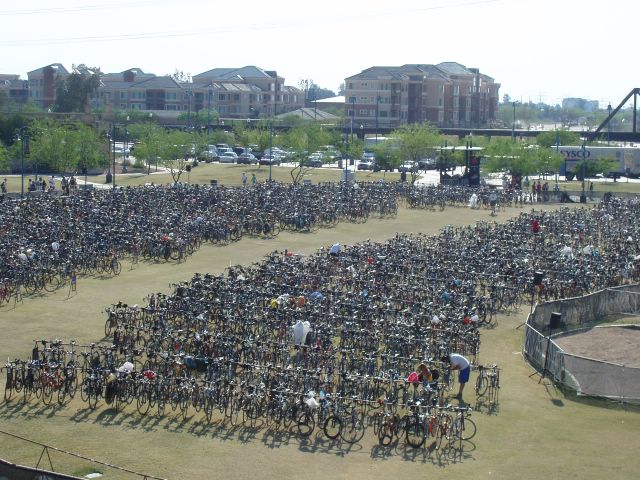
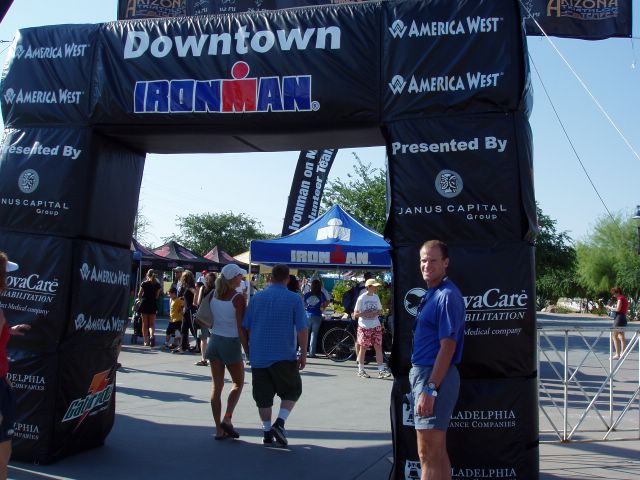
Monday, April 04, 2005
Tri the Rim Triathlon offers spring checkup
Student Affairs Director Bill Bolden has been involved with the Fort Lewis College Tri the Rim Triathlon for each of its 17 years.
This community event, to be held on April 16 at 10 a.m., features a 500-yard swim (10 laps in the FLC pool), 12-mile bike (three laps around the rim) and a 5K (3.1 miles) run (once around the FLC campus).
Both teams and individuals are encouraged to participate.
Participants come from throughout the Four Corners to compete in this annual spring rite, but the race has also drawn athletes from Denver, Colorado Springs, Salt Lake City and Albuquerque.
"This is a good spring check-up for your fitness level over the winter," Bolden said. "We have many generous sponsors at this race, and everyone should get a prize."
Hassle Free Sports, Durango Sports Club, Trimble Hot Springs and Brown's Sport Shoe have all been long-time sponsors of Tri the Rim.
With a fun course and great swag, what more could area triathletes possibly want?
"A lot of first-timers are afraid of swimming that far and that's why we have a sprint format," Bolden said.
"Even slower swimmers will make it out of the pool in less than 15 minutes."
With constantly changing spring weather conditions, area triathletes would also do well to hope for sunny, blue skies.
Megan Raymond, assistant director for housing at FLC, is helping with the triathlon and is shadowing Bolden this year.
"This is a good kickoff for a fun summer of events," Raymond said.
"We have a new run course that's part trail and part road and it's all on the rim so you won't have to fight traffic."
In past years, the run portion of the triathlon went down Goeglein Gulch and back up again.
Raymond had a little difficulty measuring and setting this year's run course.
"Every time I tried to measure it, there were a lot of wet, muddy spots," Raymond said. "But I think it's pretty close to actually being 5K."
Steve Stovall, 64, marketing professor at FLC, will be competing in his ninth Tri the Rim.
"It's a good time of the year to have a race because it provides me an incentive to train through the winter," Stovall said. "At my age, it's good to cross-train so I can stay healthy."
Stovall thinks of himself as a runner who is disguised as a triathlete. While competing at the Freedom Days Triathlon in Farmington a few years ago, Stovall had a panic attack in the water.
"I had to walk most of the 10K (6.2 miles) run and the bike portion was a sheer hill," Stovall explained.
Since there were only two people over the age of 60, Stovall finished second in his division and won a nice ceramic bowl.
"That was my reward for sticking it out," Stovall said.
Gary Goold, 51, has completed 15 or so Tri the Rims and is planning to participate this year.
"The thing I remember most about all of the triathlons is that they are consistently well-organized," Goold said.
"I do these for fun because I enjoy the activity and cross-training."
For more information and registration, call Bolden at 970-247-7508.
This community event, to be held on April 16 at 10 a.m., features a 500-yard swim (10 laps in the FLC pool), 12-mile bike (three laps around the rim) and a 5K (3.1 miles) run (once around the FLC campus).
Both teams and individuals are encouraged to participate.
Participants come from throughout the Four Corners to compete in this annual spring rite, but the race has also drawn athletes from Denver, Colorado Springs, Salt Lake City and Albuquerque.
"This is a good spring check-up for your fitness level over the winter," Bolden said. "We have many generous sponsors at this race, and everyone should get a prize."
Hassle Free Sports, Durango Sports Club, Trimble Hot Springs and Brown's Sport Shoe have all been long-time sponsors of Tri the Rim.
With a fun course and great swag, what more could area triathletes possibly want?
"A lot of first-timers are afraid of swimming that far and that's why we have a sprint format," Bolden said.
"Even slower swimmers will make it out of the pool in less than 15 minutes."
With constantly changing spring weather conditions, area triathletes would also do well to hope for sunny, blue skies.
Megan Raymond, assistant director for housing at FLC, is helping with the triathlon and is shadowing Bolden this year.
"This is a good kickoff for a fun summer of events," Raymond said.
"We have a new run course that's part trail and part road and it's all on the rim so you won't have to fight traffic."
In past years, the run portion of the triathlon went down Goeglein Gulch and back up again.
Raymond had a little difficulty measuring and setting this year's run course.
"Every time I tried to measure it, there were a lot of wet, muddy spots," Raymond said. "But I think it's pretty close to actually being 5K."
Steve Stovall, 64, marketing professor at FLC, will be competing in his ninth Tri the Rim.
"It's a good time of the year to have a race because it provides me an incentive to train through the winter," Stovall said. "At my age, it's good to cross-train so I can stay healthy."
Stovall thinks of himself as a runner who is disguised as a triathlete. While competing at the Freedom Days Triathlon in Farmington a few years ago, Stovall had a panic attack in the water.
"I had to walk most of the 10K (6.2 miles) run and the bike portion was a sheer hill," Stovall explained.
Since there were only two people over the age of 60, Stovall finished second in his division and won a nice ceramic bowl.
"That was my reward for sticking it out," Stovall said.
Gary Goold, 51, has completed 15 or so Tri the Rims and is planning to participate this year.
"The thing I remember most about all of the triathlons is that they are consistently well-organized," Goold said.
"I do these for fun because I enjoy the activity and cross-training."
For more information and registration, call Bolden at 970-247-7508.
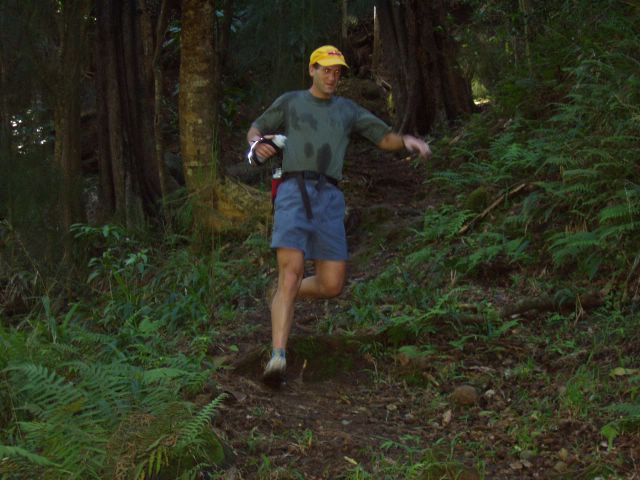
Subscribe to:
Posts (Atom)